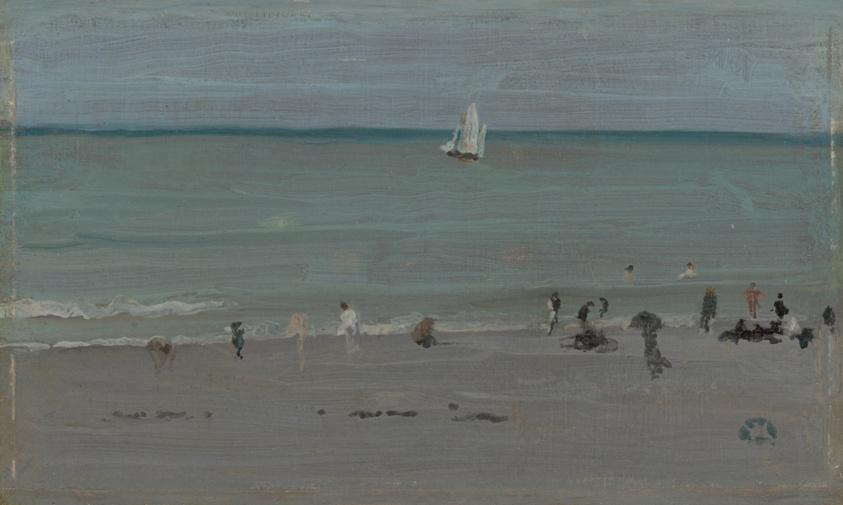
Coast Scene, Bathers
James McNeill Whistler
1163 likes93 comments
Paintale uses cookies for essential site functionality and, where enabled, to serve relevant advertising via Google AdSense. You can accept all cookies or reject non-essential ones. See our Privacy Policy for details.
Now viewing
The Song of the Lark
Jules Breton
Period
1871-1900
Theme
Landscape
Medium
Oil on canvas
Current Location
Art Institute of Chicago, Chicago
The Story
The Song of the Lark (French: Le Chant de l'alouette), Art Institute of Chicago is an oil on canvas painting by French naturalist artist Jules Breton, from 1884.
Created in 1884, this work belongs firmly within the landscape tradition of American painting. Jules Breton worked at a moment when the young republic was still deciding what its own art should look like — how much to borrow from Europe, how much to invent from its own landscape and daily life. Every gesture, fabric, and gleam of light was pitched at an audience learning to take American subjects seriously.
As Oil on canvas (110.6 × 85.8 cm (43 1/2 × 33 3/4 in.); Framed: 142.3 × 116.9 cm (56 × 46 in.)), the work shows the tool marks and layering choices typical of Jules Breton's output in this period — decisions about ground, underpainting, and glaze that a photograph can only partly convey.
Look closely and the painting opens up. Objects you might pass over — a folded letter, a half-drawn curtain, the angle of a glance — were placed to be read. Weather and light are the real subject — the artist is tracking a specific, fleeting atmospheric moment rather than an idealized, generic view.
Today the painting is held by Art Institute of Chicago in Chicago, where it remains a touchstone for understanding Jules Breton's contribution to Western art. It has been studied, copied, restored, and argued over for centuries — proof that great paintings keep generating new readings long after their creators have gone.
“A silence so complete it becomes its own witness.”
A lone peasant girl pauses her work to listen to a lark singing in the distance. Her emotional response to this moment of natural beauty is accentuated by the glow of the sun rising behind her, suffusing the landscape with golden light. Jules Breton specialized in scenes of rustic life in the countryside. Having been raised in the rural village of Courrières in northern France, he admired the people living there for their resourcefulness and connection to nature and gained immense popularity by painting them in his idealized style.
Henry Field Memorial Collection
Materials: oil paint, canvas.
Technique: oil painting, painting, painting (image making), painting techniques.
Inscriptions: Inscribed lower left: Jules Breton / Courrieres 1884.
Bought from the artist by George A. Lucas, Paris, for Samuel P. Avery in 1885 [this and the following information according to Omaha 1982-83]; sold to Henry Field (died 1890), Chicago, 1885; by descent to his wife, Mrs. Florence Lathrop Field; transferred to the Art Institute in October 1894; given to the Art Institute, 1916.
Art Institute of Chicago, Chicago. View on the museum’s official page.
See more works at Art Institute of Chicago or browse the full Jules Breton collection.
A restrained palette and sculptural lighting create a solemn geometry. The wooden crate and letter anchor the narrative with journalistic precision.
Sources
Keep Exploring
More paintings like this
James McNeill Whistler
James McNeill Whistler
George Inness
George Inness
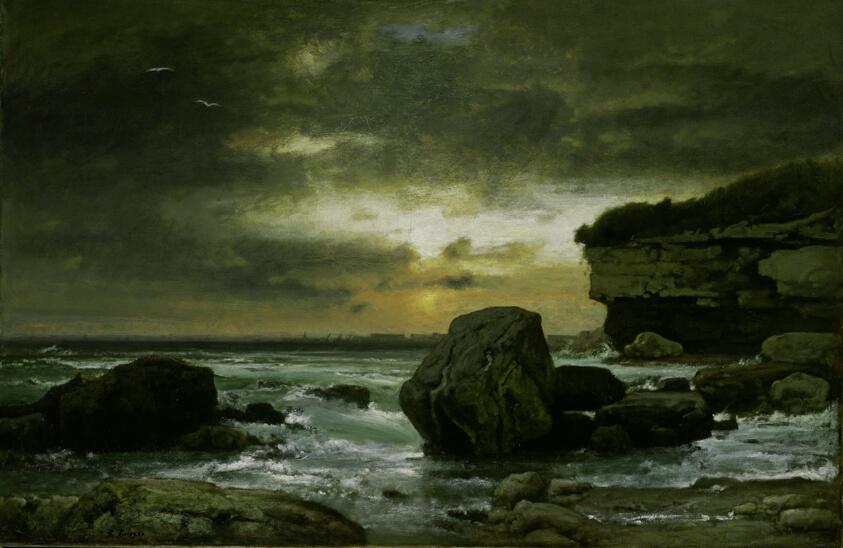
George Inness
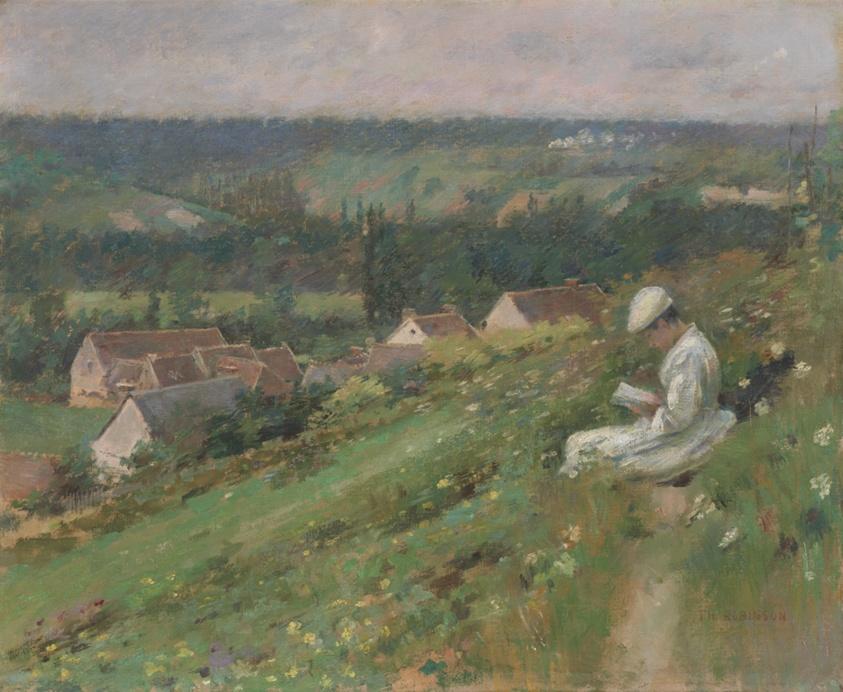
Theodore Robinson

George Inness
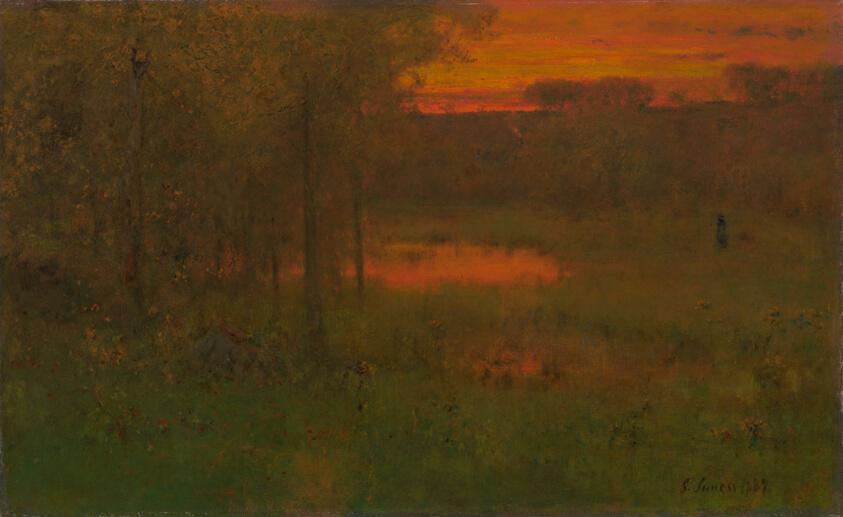
George Inness