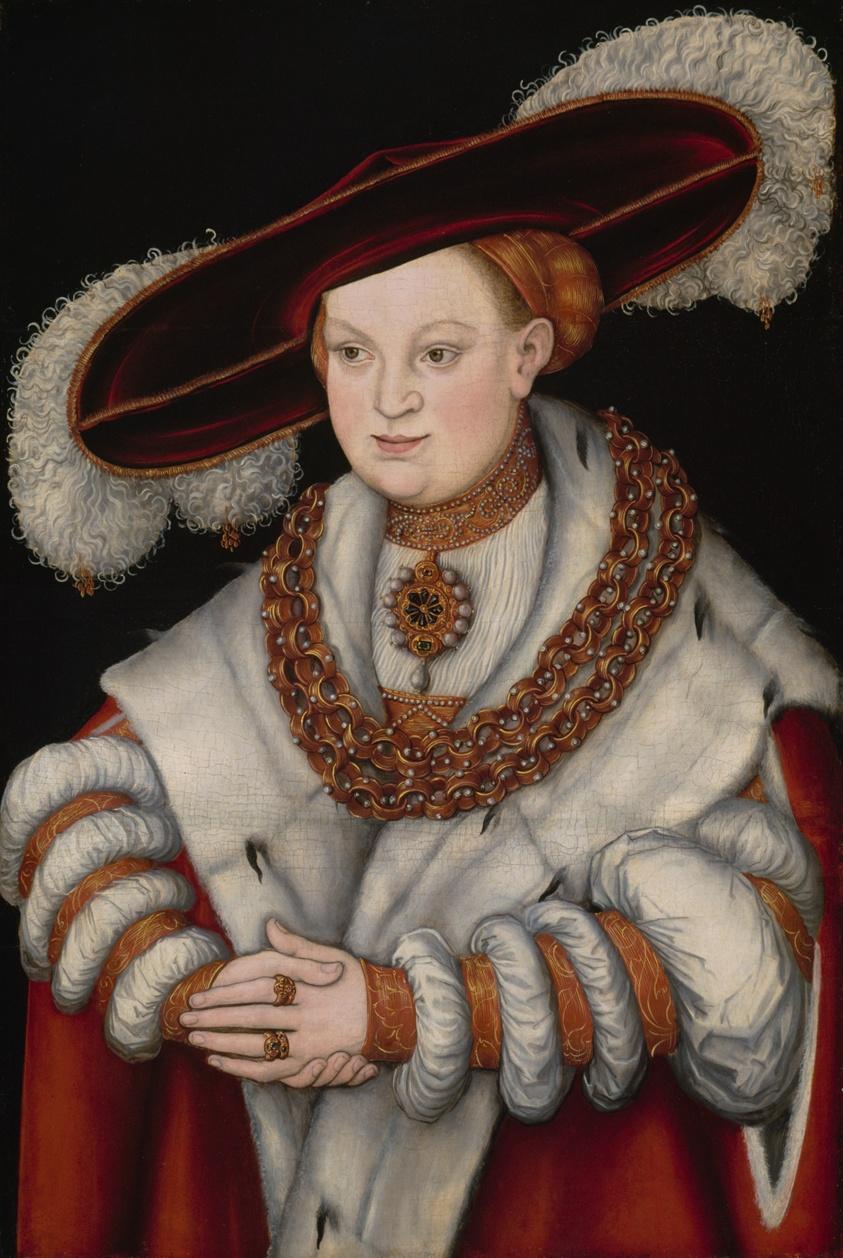
Portrait of Magdalena of Saxony, Wife of Elector Joachim II of Brandenburg
Lucas Cranach the Elder
1122 likes72 comments
Paintale uses cookies for essential site functionality and, where enabled, to serve relevant advertising via Google AdSense. You can accept all cookies or reject non-essential ones. See our Privacy Policy for details.
Now viewing
Saint Jerome in Penitence
Master of the Lille Adoration
Period
1500-1550
Theme
Portrait
Medium
Oil on panel
Current Location
Art Institute of Chicago, Chicago
The Story
Saint Jerome, known for translating the Bible into Latin, was a popular subject for paintings in the Renaissance, a period of renewed interest in secular and religious learning. Artists typically depicted him as a scholar in his study or as an ascetic in the wilderness, but this portrait-like image combines both themes. The books before him on the desk suggest his learned character, while the crucifix and skull he contemplates as he beats his breast with a rock evoke his hermetic activities.
The saint displays the nervous, exaggerated gestures often found in work by this artist, known as the Master of the Lille Adoration.
As Oil on panel (34.2 × 25.3 cm (13 1/2 × 10 in.)), the work shows the tool marks and layering choices typical of Master of the Lille Adoration's output in this period — decisions about ground, underpainting, and glaze that a photograph can only partly convey.
Look closely and the painting opens up. Objects you might pass over — a folded letter, a half-drawn curtain, the angle of a glance — were placed to be read. The sitter is constructed: clothes, pose, and attributes were chosen to project status, virtue, and lineage.
Today the painting is held by Art Institute of Chicago in Chicago, where it remains a touchstone for understanding Master of the Lille Adoration's contribution to Western art. It has been studied, copied, restored, and argued over for centuries — proof that great paintings keep generating new readings long after their creators have gone.
“A silence so complete it becomes its own witness.”
This painting features documented symbols with their own dedicated meaning in art history:
Saint Jerome, known for translating the Bible into Latin, was a popular subject for paintings in the Renaissance, a period of renewed interest in secular and religious learning. Artists typically depicted him as a scholar in his study or as an ascetic in the wilderness, but this portrait-like image combines both themes. The books before him on the desk suggest his learned character, while the crucifix and skull he contemplates as he beats his breast with a rock evoke his hermetic activities. The saint displays the nervous, exaggerated gestures often found in work by this artist, known as the Master of the Lille Adoration.
Gift of Suzette and Eugene Davidson
Technique: panel painting, oil painting, painting, painting (image making), painting techniques.
British private collection, based on the label from an auction catalogue attached to the back of the panel (the label reads ALBERT DURER/11. Saint Jerome meditating. Very masterly). Julius Weitzner, London, by 1972 (according to email from Richard Feigen to Martha Wolff, October 19 and 20, 2016); consigned by Weitzner to Richard L. Feigen & Co., New York and Chicago, by 1972 (according to email exchange cited above and Feigen’s 1972 exhibition); sold to Suzette Morton Davidson (died 1996), Chicago and Santa Barbara, September 22, 1972 (according to Mrs. Davidson’s collection notes; copy supplied by her son, Victor Zurcher); by descent to Mr. and Mrs. Victor K. Zurcher, Hampshire, Ill.
Art Institute of Chicago, Chicago. View on the museum’s official page.
See more works at Art Institute of Chicago or browse the full Master of the Lille Adoration collection.
A restrained palette and sculptural lighting create a solemn geometry. The wooden crate and letter anchor the narrative with journalistic precision.
Sources
Keep Exploring
More paintings like this
Lucas Cranach the Elder
Follower of Titian
Ridolfo Ghirlandaio
Attributed to Hans Holbein the Younger
Jan Sanders van Hemessen
Attributed to Hans Maler
Anonymous
Albrecht Dürer