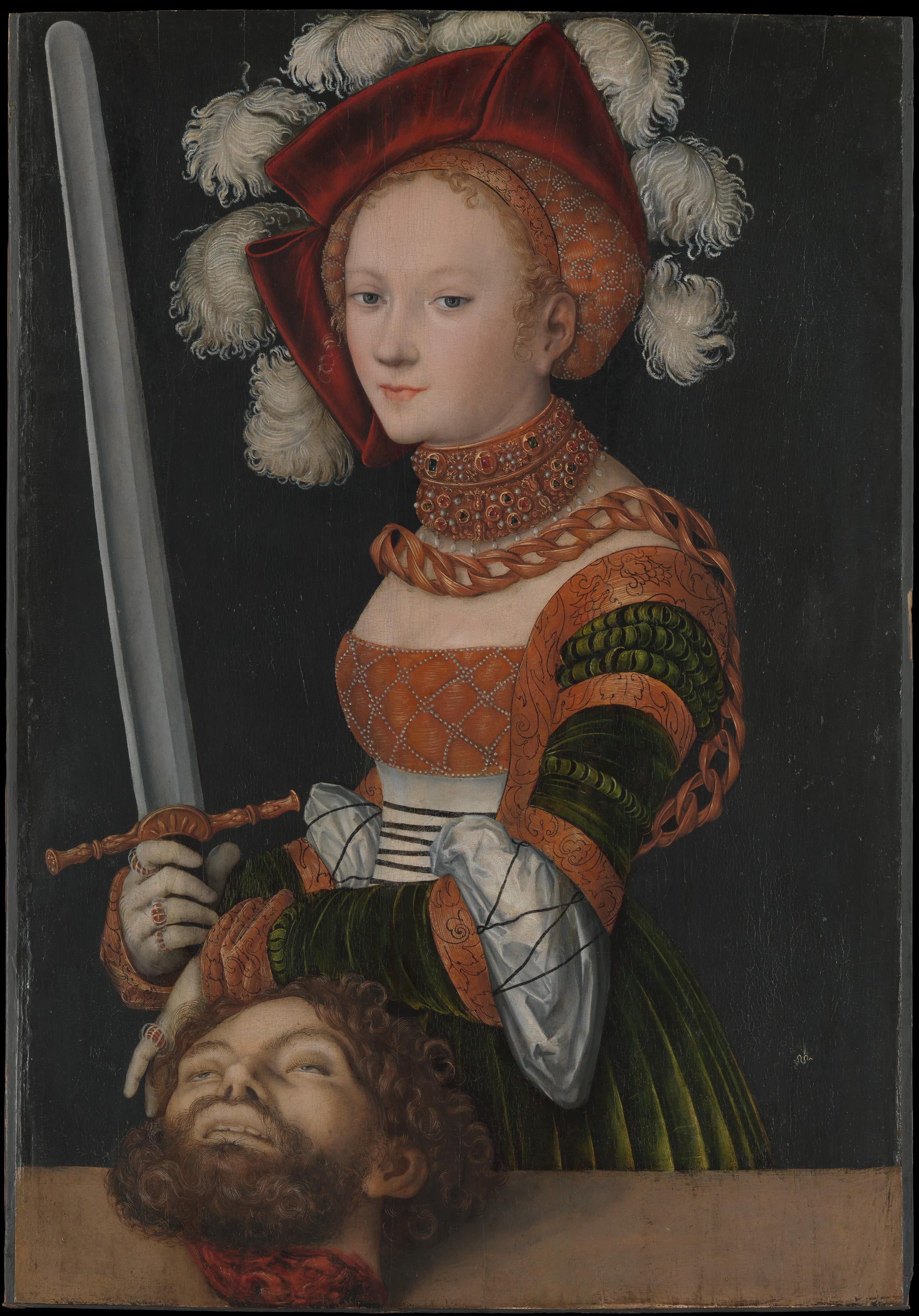
Judith with the Head of Holofernes
Lucas Cranach the Elder
1471 likes41 comments
Paintale uses cookies for essential site functionality and, where enabled, to serve relevant advertising via Google AdSense. You can accept all cookies or reject non-essential ones. See our Privacy Policy for details.
Now viewing
Portrait of Magdalena of Saxony, Wife of Elector Joachim II of Brandenburg
Lucas Cranach the Elder
Period
1500-1550
Theme
Portrait
Medium
Oil on panel
Current Location
Art Institute of Chicago, Chicago
The Story
As court painter to the electors of Saxony, Lucas Cranach the Elder developed a portrait style that catered to his patrons’ concern with dynastic continuity by emphasizing their princely status through careful depictions of their sumptuous garb and lavish jewelry. The artist’s attention to such details enabled the identification of this sitter: a signet ring in a companion portrait of her husband in the Philadelphia Museum of Art reveals her to be the Saxon princess Magdalena.
A watercolor showing Magdalena in the same richly patterned dress suggests that Cranach made this portrait during his visit to Berlin around 1529.
As Oil on panel (59.8 × 41.6 cm (23 9/16 × 16 3/8 in.); Framed: 69.3 × 50.8 × 5.8 cm (27 1/4 × 20 × 2 1/4 in.)), the work shows the tool marks and layering choices typical of Lucas Cranach the Elder's output in this period — decisions about ground, underpainting, and glaze that a photograph can only partly convey.
Look closely and the painting opens up. Objects you might pass over — a folded letter, a half-drawn curtain, the angle of a glance — were placed to be read. Every prop in a portrait like this is a decision — jewelry, fabric, and hand position were negotiated between painter and patron to shape how the sitter would be remembered.
Art Institute of Chicago in Chicago now holds the work, where conservators and historians continue to revisit its condition and attribution. Each generation of scholarship adds a layer to how Lucas Cranach the Elder's output from this period is understood.
“A silence so complete it becomes its own witness.”
As court painter to the electors of Saxony, Lucas Cranach the Elder developed a portrait style that catered to his patrons’ concern with dynastic continuity by emphasizing their princely status through careful depictions of their sumptuous garb and lavish jewelry. The artist’s attention to such details enabled the identification of this sitter: a signet ring in a companion portrait of her husband in the Philadelphia Museum of Art reveals her to be the Saxon princess Magdalena. A watercolor showing Magdalena in the same richly patterned dress suggests that Cranach made this portrait during his visit to Berlin around 1529.
Gift of Kate S. Buckingham
Technique: painting, oil painting, painting (image making), painting techniques, panel painting.
Gustav Fincke, Bamberg; sold, Bamberg, Sept. 11 or following, 1865, no. 8, to Buchner, Bamberg, with a portrait now identiable as the sitter’s husband Joachim II of Brandenburg [Frimmell 1891]; sold, Lepke, Berlin, June 3 or following, 1891, no. 831. Ament collection, Bamberg; sold, Bangel, Frankfurt, Apr. 9, 1894, no. 109. Alexis Schönlank, Berlin; sold, Lempertz, Cologne, Apr. 28–29, 1896, no. 35, to Sedelmeyer, for 2650 marks [According to a copy of the Schönlank sale catalogue in the R.K.D., The Hague, annotated by Abraham Bredius, who characterized both portraits as old copies. At this sale, the male portrait went to Knoedler’s, New York; it is now in the Philadelphia Museum of Art].; Galerie Sedelmeyer, Paris, from 1896 to at least 1900 [see Galerie Sedelmeyer 1900]. Demotte Galleries, New York, by 1920 [See San Francisco 1920; Registrar’s records also list Countess Miranda as a former owner of the picture, although the basis for this is unclear]. J. Vigouroux, New York [according to registrar’s records]. Kate S. Buckingham (d. 1938), Chicago, by 1924 [according to a shipping order dated Dec. 1, 1924, Art Institute Ar-chives]; be-queathed to the AIC, 1938.
Art Institute of Chicago, Chicago. View on the museum’s official page.
See more works at Art Institute of Chicago or browse the full Lucas Cranach the Elder collection.
A restrained palette and sculptural lighting create a solemn geometry. The wooden crate and letter anchor the narrative with journalistic precision.
Sources
Keep Exploring
More paintings like this
Lucas Cranach the Elder
Lucas Cranach the Elder
Lucas Cranach the Elder
Lucas Cranach the Elder
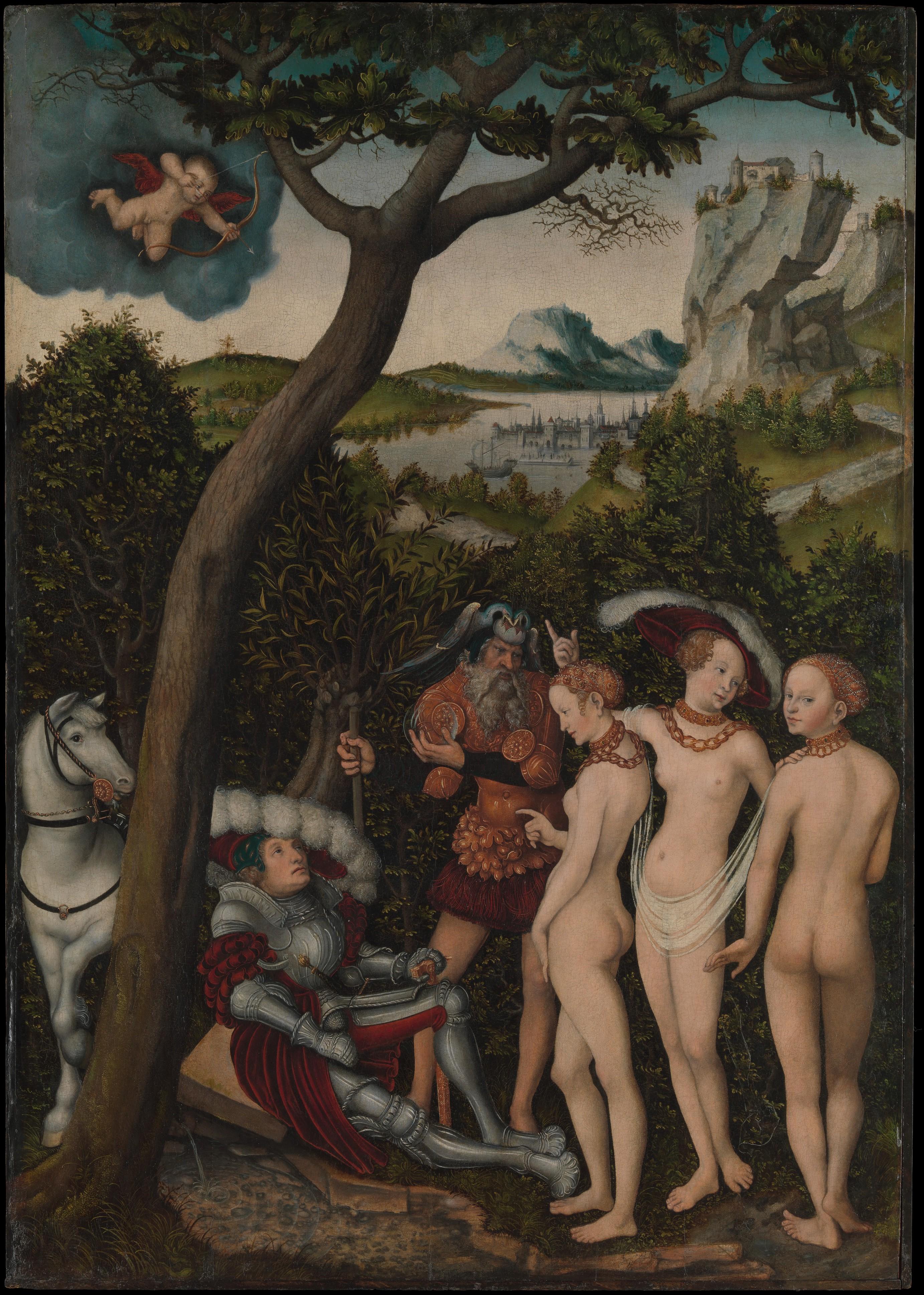
Lucas Cranach the Elder
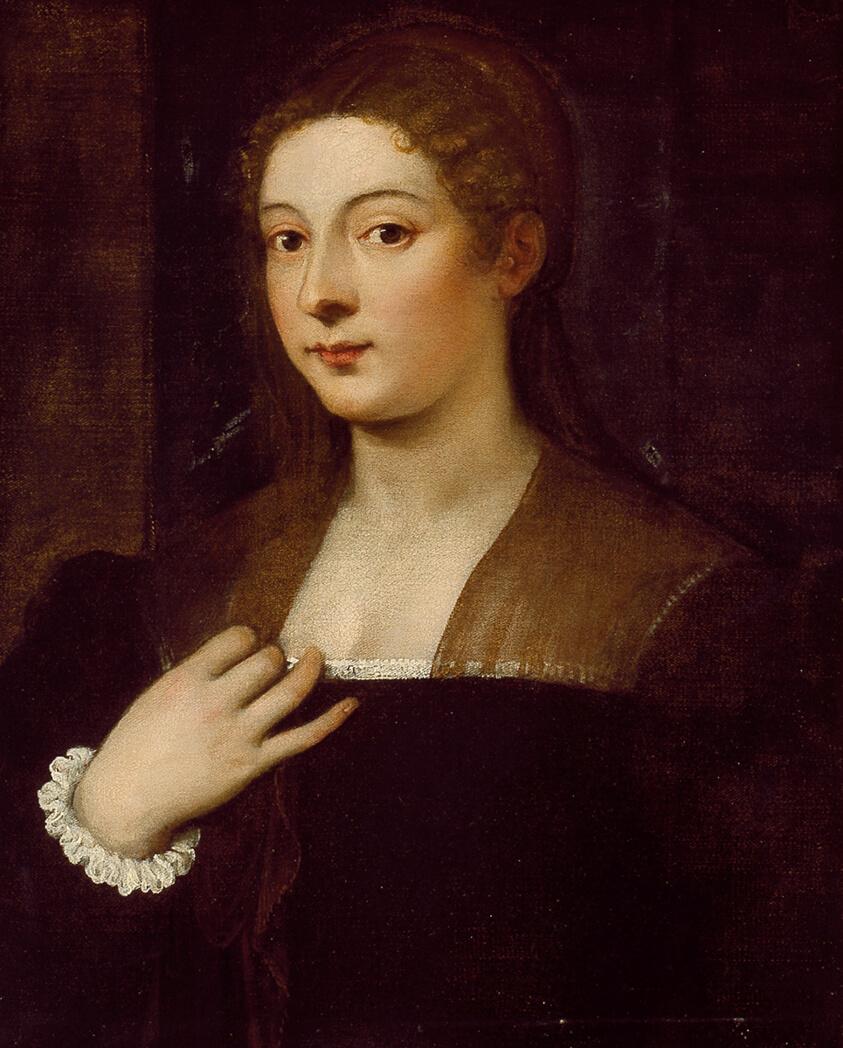
Follower of Titian
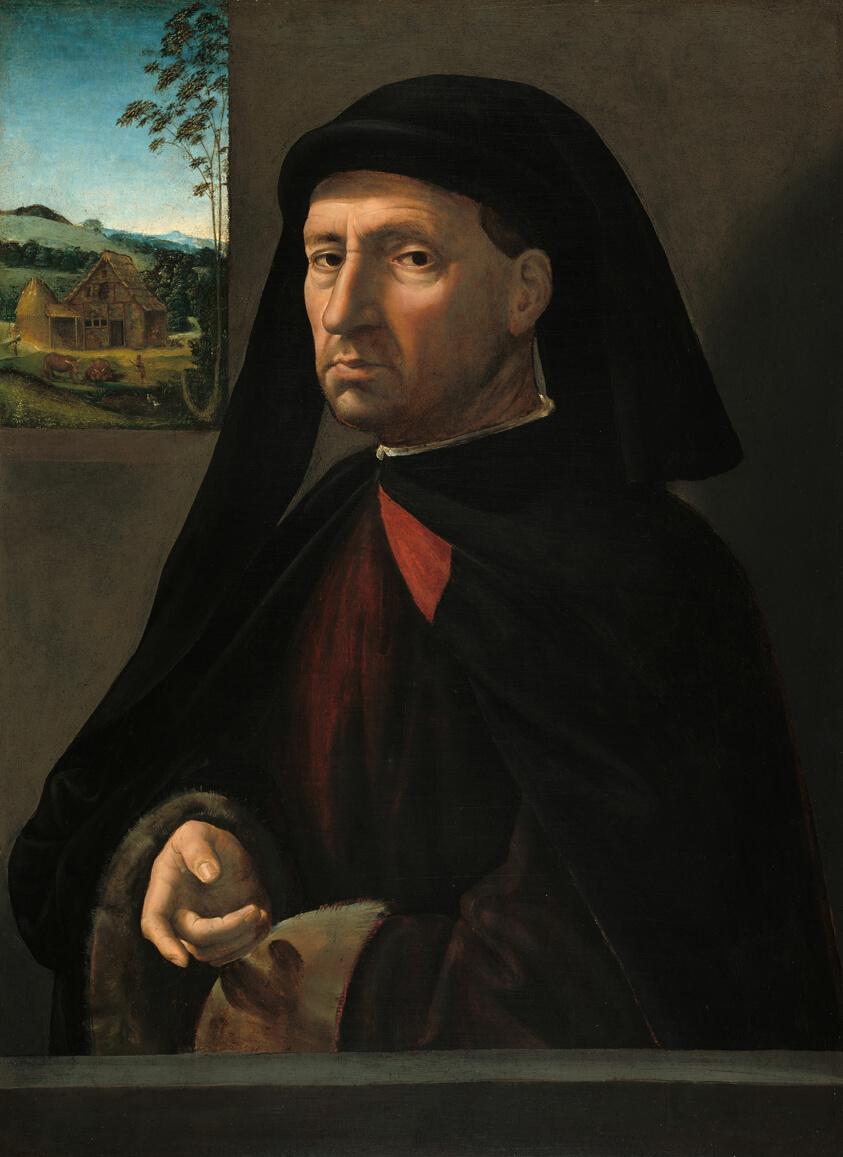
Ridolfo Ghirlandaio
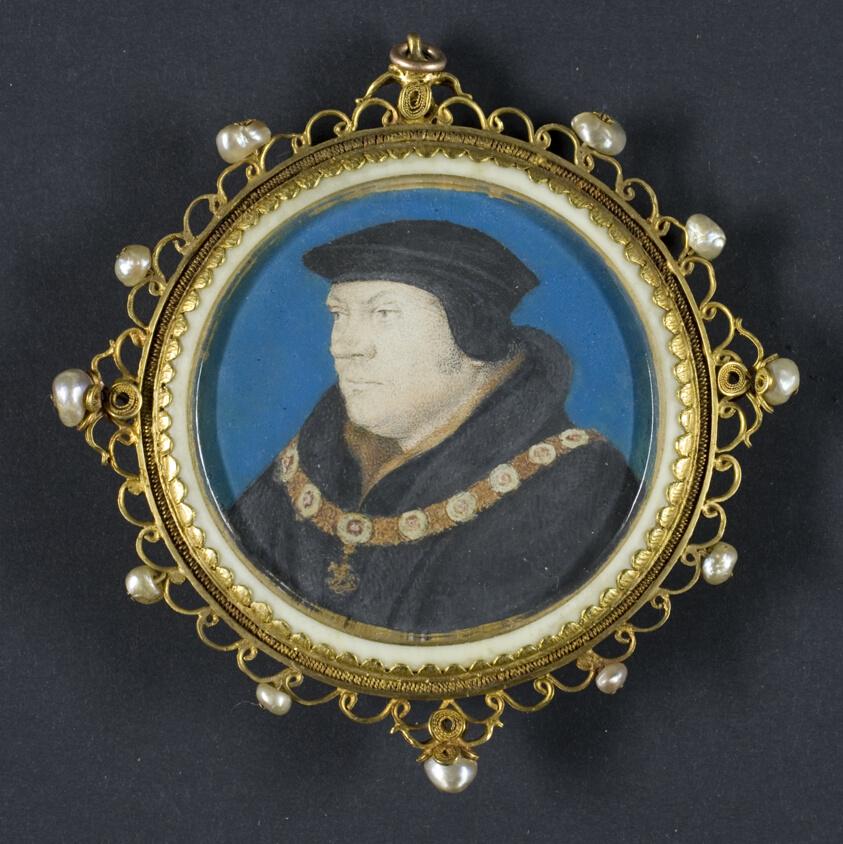
Attributed to Hans Holbein the Younger