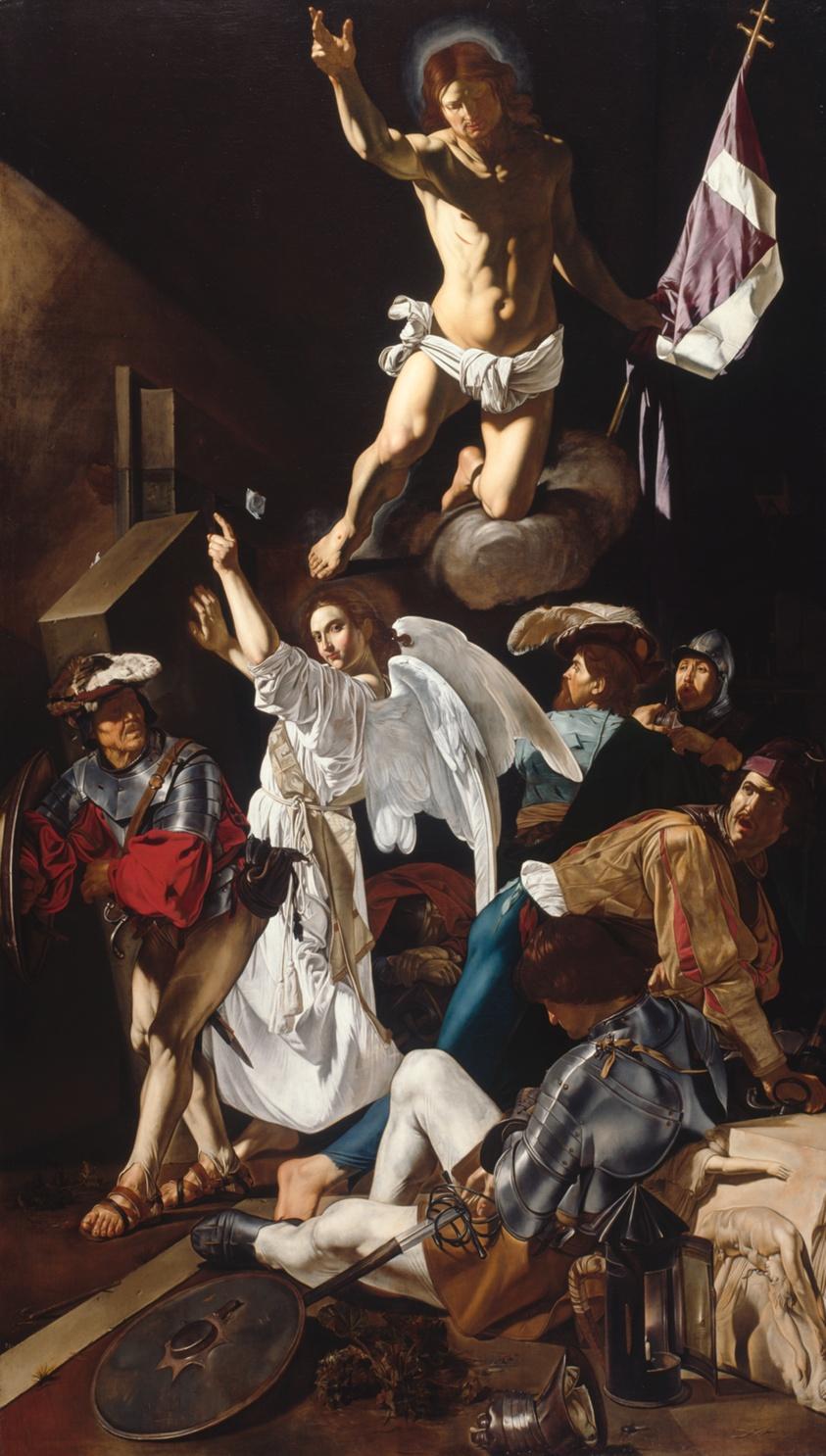
The Resurrection
Cecco del Caravaggio
918 likes148 comments
Paintale uses cookies for essential site functionality and, where enabled, to serve relevant advertising via Google AdSense. You can accept all cookies or reject non-essential ones. See our Privacy Policy for details.
Now viewing
Landscape with the Ruins of the Castle of Egmond
Jacob van Ruisdael
Period
1600-1650
Theme
Power & Politics
Medium
Oil on canvas
Current Location
Art Institute of Chicago, Chicago
The Story
The deteriorating Castle of Egmond was a visible reminder of the Dutch struggle for independence: it was sacrificially destroyed during the revolt against Spain more than 80 years before Jacob van Ruisdael produced this painting. Landscape specialists like Van Ruisdael invoked Dutch patriotism by selecting sites representative of the republic, including ruins, windmills, and city views. Ruisdael distinguished himself by working on an unusually large scale and by imbuing his scenes with drama through low horizon lines and swollen clouds.
Created in 1650 during the 1600-1650 period, this work belongs firmly within the power & politics tradition. Jacob van Ruisdael worked at a moment when the rivalry between Catholic Baroque drama and Protestant restraint reshaped what a painting could mean. Every gesture, fabric, and gleam of light was decoded by contemporary viewers like a private language.
Executed in Oil on canvas, measuring 98 × 130 cm (38 7/8 × 51 3/8 in.); Framed: 101 × 131.5 × 8.6 cm (39 3/4 × 51 3/4 × 3 3/8 in.), the surface rewards close looking. Jacob van Ruisdael builds the composition through layered glazes and a tightly controlled palette, letting cool shadows recede so that the warm, lit passages step forward.
Look closely and the painting opens up. Objects you might pass over — a folded letter, a half-drawn curtain, the angle of a glance — were placed to be read. Commissioned images like this one were rarely neutral; every architectural flourish argues for authority.
Housed at Art Institute of Chicago in Chicago, the painting has passed through the hands of collectors, dealers, and institutions before reaching public view — a provenance that is itself part of the object's story.
“A silence so complete it becomes its own witness.”
The deteriorating Castle of Egmond was a visible reminder of the Dutch struggle for independence: it was sacrificially destroyed during the revolt against Spain more than 80 years before Jacob van Ruisdael produced this painting. Landscape specialists like Van Ruisdael invoked Dutch patriotism by selecting sites representative of the republic, including ruins, windmills, and city views. Ruisdael distinguished himself by working on an unusually large scale and by imbuing his scenes with drama through low horizon lines and swollen clouds.
Potter Palmer Collection
Technique: oil painting, painting techniques, painting (image making).
Inscriptions: Inscribed lower right in ligature: JVR.
Possibly Collection of Jean-André Tardieu; sold, Paris, Hôtel Drouot, May 10-11, 1867, lot 51 as Les Ruines du Château de Brederode for 3,650 francs. Baron Etienne Martin de Beurnonville (1789-1876), château de la Chapelle, Labbeville, Val d'Oise, France; sale of his estate, Paris, Hôtel Drouot, May 9, 1881, lot 451 as Ruins of the Castle of Brederode; sold to Charles Sedelmeyer (1837-1925), Paris, for 10,000 francs [annotated sale cat., Rijksbureau voor Kunsthistorische Documentatie, The Hague; copy in curatorial object file]. György Ráth (1828-1905), Budapest, by 1892 until before 1905 [this and the following according to Frimmel 1892]. P & D. Colnaghi, London, by 1906; sold to Oscar Huldschinsky (died 1931), Berlin, by Jan. 1906 [Berlin 1906]; offered for sale, Paul Cassirer, Berlin, May 10-11, 1928, lot 29, bought in at 61,000 marks [according to Rosenberg 1928 and La Revue d'Art 1928]. Galerie Goudstikker, Rotterdam and Amsterdam, by Dec. 1928 to at least Feb. 1929 [Rotterdam and Amsterdam 1928]. Bachstitz Gallery, The Hague, by 1932 [this and the following according to email correspondence with Agnews, July 2004, in curatorial object file]; consigned to Agnews, London, Oct. 1932 [not part of the Von Auspitz collection, but included in the 1932 catalogue, no. 27]; returned to the Bachstitz Gallery, The Hague, Mar. 1933 until at least 1935 [inventory nos. G95 and Ru1356 in the Bachstitz Gallery archive at the Rijksbureau voor Kunsthistorische Documentatie, The Hague; Bulletin of the Bachstitz Gallery 1935]. Paul Cassirer, Ltd., London, 1947, as agent for an anonymous family, with Otto Reichenheim, Canfield Gardens, London, as intermediary; sold to the Art Institute, 1947.
Art Institute of Chicago, Chicago. View on the museum’s official page.
See more works at Art Institute of Chicago or browse the full Jacob van Ruisdael collection.
A restrained palette and sculptural lighting create a solemn geometry. The wooden crate and letter anchor the narrative with journalistic precision.
Sources
Keep Exploring
More paintings like this
Cecco del Caravaggio
Diego Velázquez
Anthony van Dyck

Leonardo da Vinci

Leonardo da Vinci
James McNeill Whistler
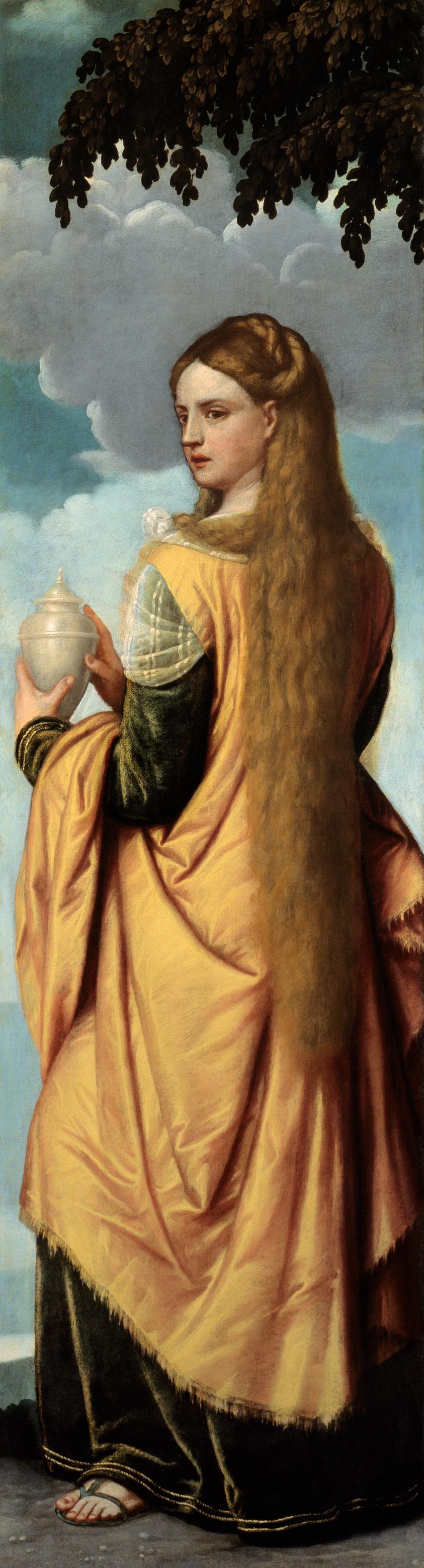
Moretto da Brescia

Correggio