
Virgin and Child with the Young Saint John the Baptist
Correggio
1457 likes27 comments
Paintale uses cookies for essential site functionality and, where enabled, to serve relevant advertising via Google AdSense. You can accept all cookies or reject non-essential ones. See our Privacy Policy for details.
Now viewing
Mary Magdalene
Moretto da Brescia
Period
1500-1550
Theme
Power & Politics
Medium
Oil on canvas
Current Location
Art Institute of Chicago, Chicago
The Story
Mary Magdalene turns to cast a melancholy glance back at the viewer with the gravity and directness typical of Moretto da Brescia’s approach to religious subjects. This painting has been linked to other tall, slender canvases by the artist depicting Saint John the Evangelist, the Samian Sibyl, and King Solomon, in the Biblioteca Ambrosiana in Milan. These works may have been segments of an altarpiece or, more likely, part of a series with a decorative rather than liturgical function.
The artist effectively combined characteristics of Italian painting from different regions: the realism of his native Lombardy, Venetian color and atmosphere, and the monumentality of Roman models.
The physical object — Oil on canvas, 166 × 47 cm (65 3/8 × 18 1/2 in.); Framed: 181 × 66.1 × 5.1 cm (71 1/4 × 26 × 2 in.) — carries its own history of handling and restoration. Moretto da Brescia's brushwork here moves between exacting description and looser, more suggestive passages, a balance typical of Renaissance studio practice.
Look closely and the painting opens up. Objects you might pass over — a folded letter, a half-drawn curtain, the angle of a glance — were placed to be read. Scale and setting do political work here, elevating the subject above the room it would have hung in.
Art Institute of Chicago in Chicago now holds the work, where conservators and historians continue to revisit its condition and attribution. Each generation of scholarship adds a layer to how Moretto da Brescia's output from this period is understood.
“A silence so complete it becomes its own witness.”
Mary Magdalene turns to cast a melancholy glance back at the viewer with the gravity and directness typical of Moretto da Brescia’s approach to religious subjects. This painting has been linked to other tall, slender canvases by the artist depicting Saint John the Evangelist, the Samian Sibyl, and King Solomon, in the Biblioteca Ambrosiana in Milan. These works may have been segments of an altarpiece or, more likely, part of a series with a decorative rather than liturgical function. The artist effectively combined characteristics of Italian painting from different regions: the realism of his native Lombardy, Venetian color and atmosphere, and the monumentality of Roman models.
Gift of Mr. and Mrs. William Goodman
Technique: oil painting, painting techniques, painting (image making), painting.
Avogadro family, Brescia, by 1760, inventory after 1760, no. 82 [according to Chizzola and Carboni 1760, p. 179; and MS inventory, L.II.6 m.3, in the Biblioteca Queriniana, Brescia]; by descent to the Fenaroli family, Brescia, Palazzo Fenaroli-Avogadro, by 1820, [see catalogue of Fenaroli collection, 1820]; for relationship between the Avogadro and Fenaroli families, see Lechi, Fedrigolli, and Lechi 2010]; Bartolomeo Fenaroli (died 1869), Brescia, Palazzo Fenaroli-Avogadro, by 1869 [according to Lechi, Fedrigolli, and Lechi 2010, who cite the 1870 inventory of paintings owned by Bartolomeo made upon his death in 1869, l’Archivio Bettoni Cazzago, Brescia]; by descent to his son Gerolamo Fenaroli (died 1880), Brescia, Palazzo Fenaroli-Avogadro, from 1869 [according to Lechi, Fedrigolli, and Lechi 2010, who cite an inventory of paintings owned by Gerolamo made upon his death in 1880]; sold by his heirs in the auction of the Fenaroli collection, Brescia, April 16–19, 1882, either no. 3657 or no. 3661 [the auction catalogue is reproduced in Lechi, Fedrigolli, and Lechi 2010, pp. 66–71]. P. Scalvini Antiquario, Brescia, by 1898 [see da Ponte, 1898]. Thomas Humphry Ward, London [seller’s name given in an annotated copy of the 1904 sale catalogue at Christie’s, London referenced below]; sold Christie’s, London, May 14, 1904, no. 54, to Farrer for 100 gns [according to the annotated sale catalogued referenced above]; Sir William James Farrer (died 1911), Sandhurst Lodge, Wokingham, from 1904; sold Christie’s, London, March 23, 1912, no. 33, to Agnew for 200 gns [according to annotated copies of the sale catalogue at Christie’s, London]; sold by Agnew, London, to Charles Fairfax Murray, 1912 [information recorded in the ledger of Thomas Agnew and Sons, Ltd.]. F. Mason Perkins, Florence, by 1912 [according to a letter from F. Mason Perkins to T. J. Blakeslee dated December 5, 1912, in curatorial file]; sold by Perkins to T. J. Blakeslee (died 1914), New York, by February 23, 1914 [see letter cited above and Gombosi 1943, p. 111.]; sold to Vose Galleries, Boston, February 23, 1914 [according to Vose Galleries ledger, inventory no. 3611, Boston]; sold by Vose Galleries to William Owen Goodman, Chicago, February 5, 1917 [see letter from Robert C. Vose, Jr., to Margherita Andreotti dated May 12, 1988, in curatorial file; also Vose Galleries ledger cited above]; on loan to the Art Institute from 1928; given to the Art Institute, 1935.
Art Institute of Chicago, Chicago. View on the museum’s official page.
See more works at Art Institute of Chicago or browse the full Moretto da Brescia collection.
A restrained palette and sculptural lighting create a solemn geometry. The wooden crate and letter anchor the narrative with journalistic precision.
Sources
Keep Exploring
More paintings like this
Correggio
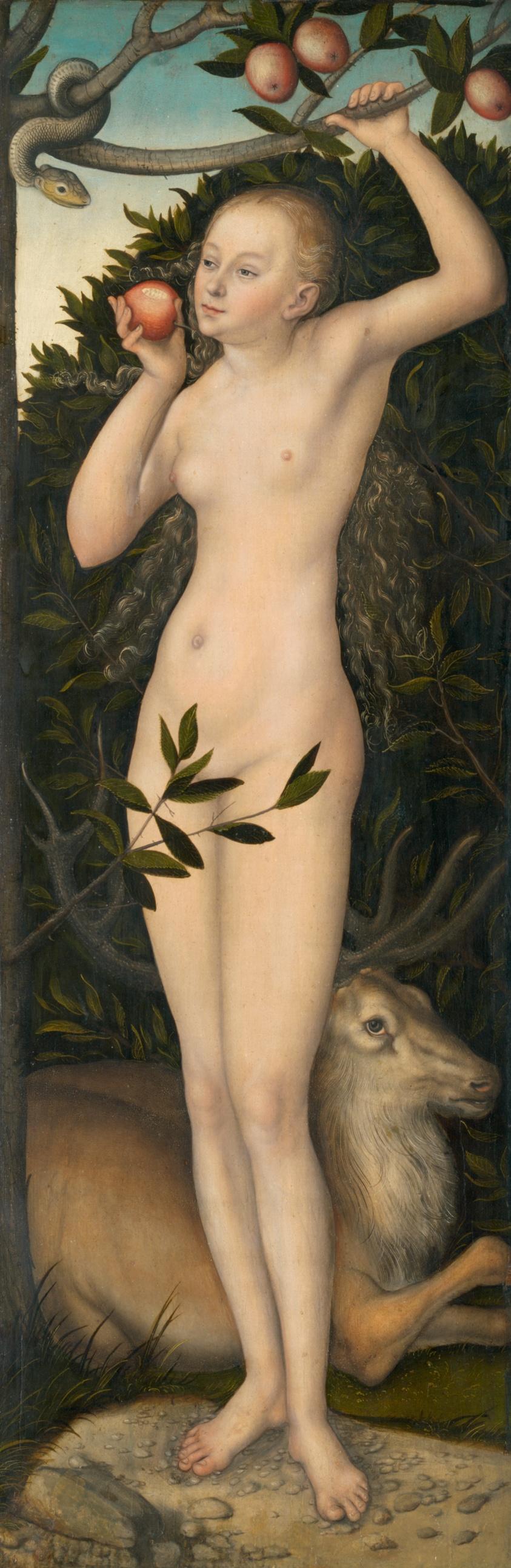
Lucas Cranach the Elder
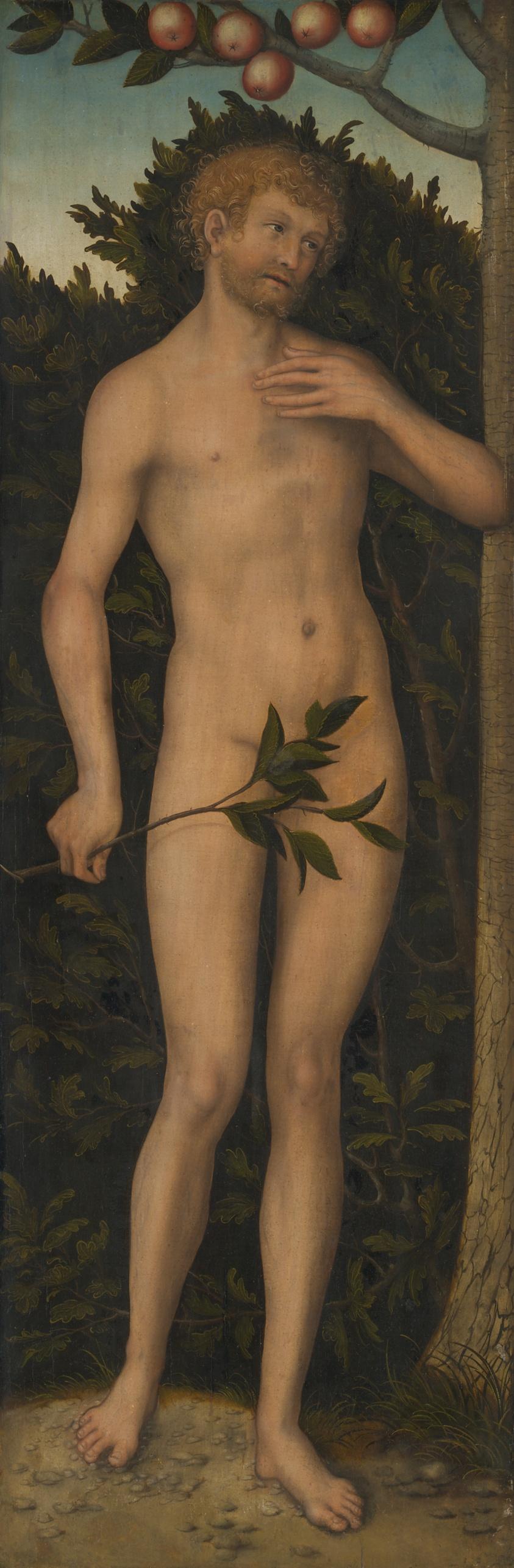
Lucas Cranach the Elder
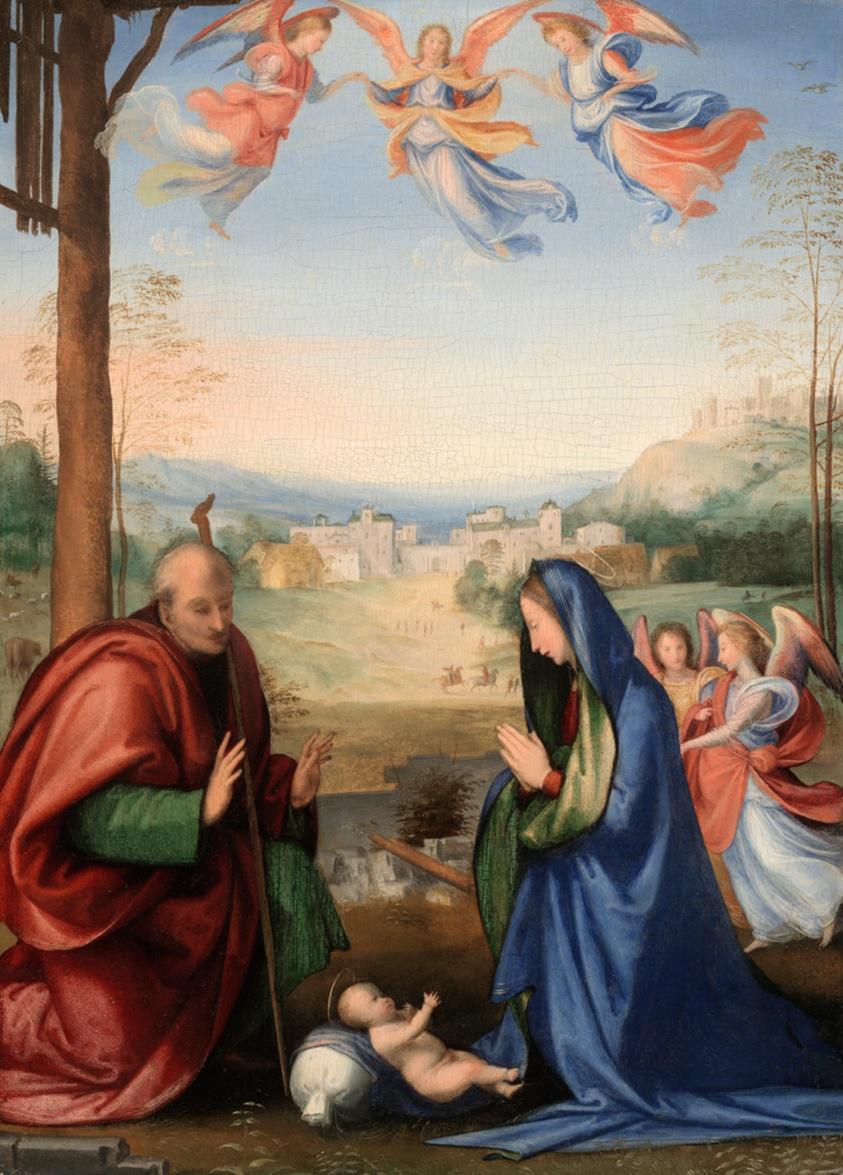
Fra Bartolommeo
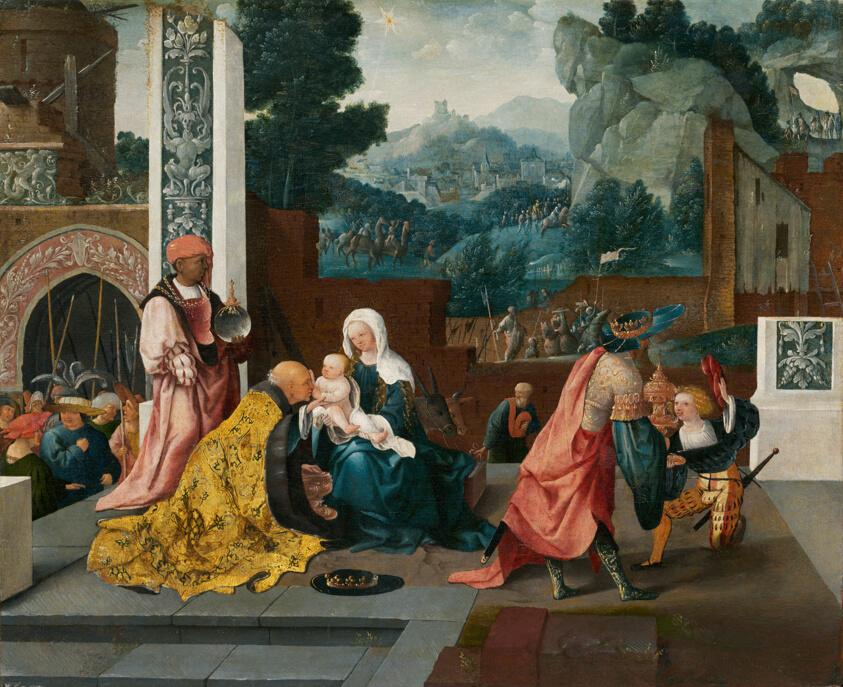
Jan van Scorel
Jan van Scorel
Jacob Cornelisz. van OostsanenWorkshop of Jacob Cornelisz. van Oostsanen
Anthony van Dyck