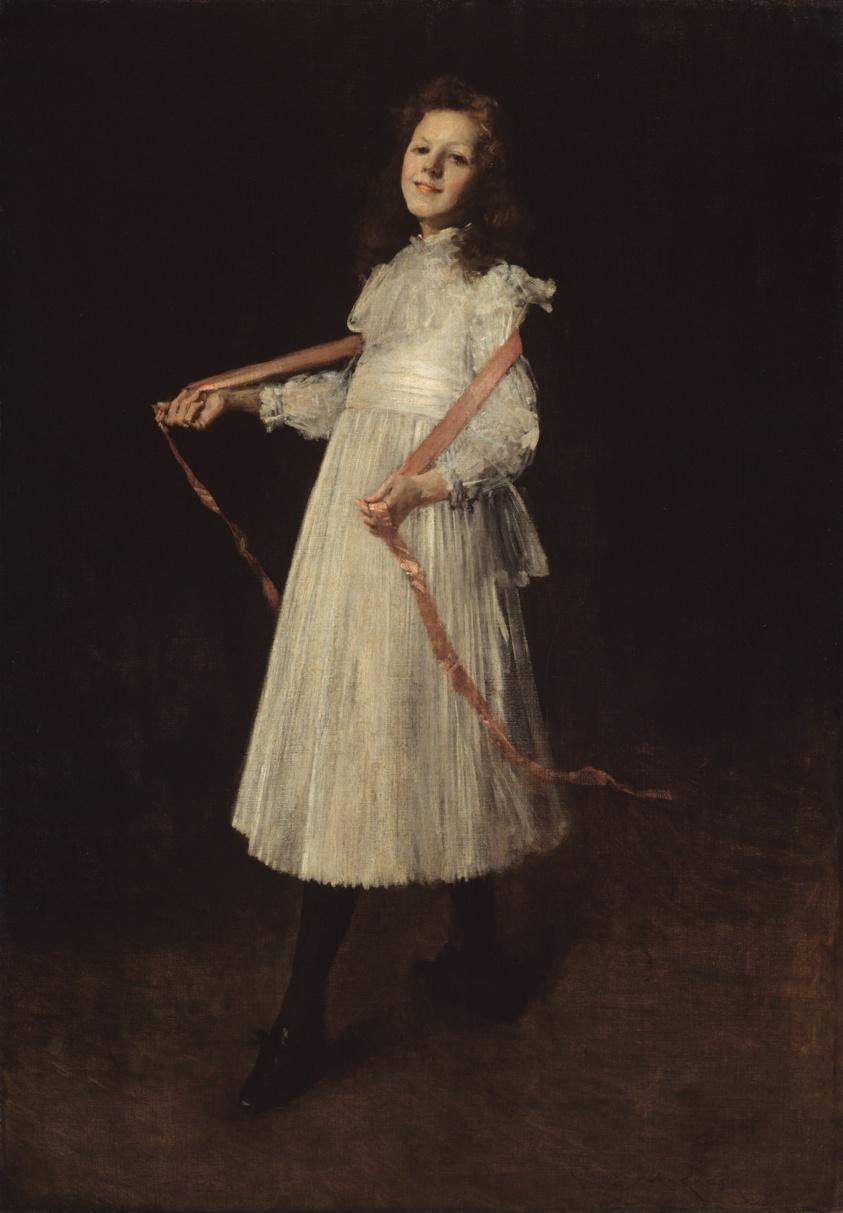
Alice
William Merritt Chase
961 likes131 comments
Paintale uses cookies for essential site functionality and, where enabled, to serve relevant advertising via Google AdSense. You can accept all cookies or reject non-essential ones. See our Privacy Policy for details.
Now viewing
Wind-Swept Sands
William Merritt Chase
Period
1871-1900
Theme
Landscape
Medium
Oil on canvas
Current Location
Art Institute of Chicago, Chicago
The Story
Between 1891 and 1902, William Merritt Chase painted numerous landscapes of the area surrounding the Shinnecock Summer Art School in Long Island, New York, where he was an influential teacher. In Wind-Swept Sands, Chase used rapid brushstrokes to depict the dunes and vegetation, thin washes for the sky, and an overall gray tone to indicate an overcast day. Chase’s teaching method was rooted in the French Impressionist practice of painting outdoors in order to take advantage of natural light and changing weather conditions.
Created in 1894, this work belongs firmly within the landscape tradition of American painting. William Merritt Chase worked at a moment when the young republic was still deciding what its own art should look like — how much to borrow from Europe, how much to invent from its own landscape and daily life. Every gesture, fabric, and gleam of light was pitched at an audience learning to take American subjects seriously.
As Oil on canvas (87 × 101.5 cm (34 1/4 × 39 3/4 in.)), the work shows the tool marks and layering choices typical of William Merritt Chase's output in this period — decisions about ground, underpainting, and glaze that a photograph can only partly convey.
Look closely and the painting opens up. Objects you might pass over — a folded letter, a half-drawn curtain, the angle of a glance — were placed to be read. The scale is the argument: a single, tiny figure against sky and rock does the work of describing nature as something larger than any human claim on it.
Housed at Art Institute of Chicago in Chicago, the painting has passed through the hands of collectors, dealers, and institutions before reaching public view — a provenance that is itself part of the object's story.
“A silence so complete it becomes its own witness.”
Between 1891 and 1902, William Merritt Chase painted numerous landscapes of the area surrounding the Shinnecock Summer Art School in Long Island, New York, where he was an influential teacher. In Wind-Swept Sands, Chase used rapid brushstrokes to depict the dunes and vegetation, thin washes for the sky, and an overall gray tone to indicate an overcast day. Chase’s teaching method was rooted in the French Impressionist practice of painting outdoors in order to take advantage of natural light and changing weather conditions.
Purchased with funds provided by Mrs. Eric Oldberg in honor of Milo M. Naeve; Friends of American Art and R. H. Love Galleries funds; Walter Aitken Endowment; through prior acquisitions of the Charles H. and Mary F. S. Worcester Collection
Inscriptions: Signed recto, bottom-left, on ground, in dark paint: "Wm M. Chase."..
The Dorflinger family, Long Island; John C. Dorflinger, White Milles, Pennsylvania, c. 1950. Robert Schwarz, Frank Schwarz & Son, Philadelphia, sold to the Art Institute of Chicago, 1991.
Art Institute of Chicago, Chicago. View on the museum’s official page.
See more works at Art Institute of Chicago or browse the full William Merritt Chase collection.
A restrained palette and sculptural lighting create a solemn geometry. The wooden crate and letter anchor the narrative with journalistic precision.
Sources
Keep Exploring
More paintings like this
William Merritt Chase
William Merritt Chase
James McNeill Whistler
James McNeill Whistler
George Inness
George Inness
George Inness
Theodore Robinson