Serpent
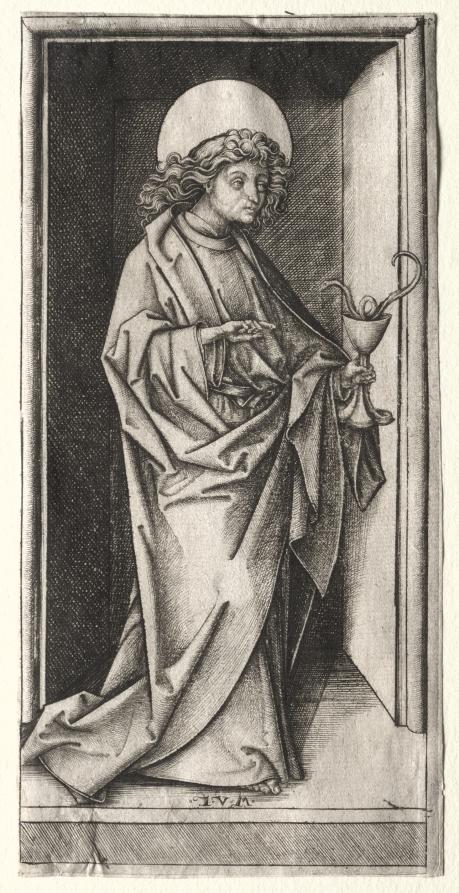
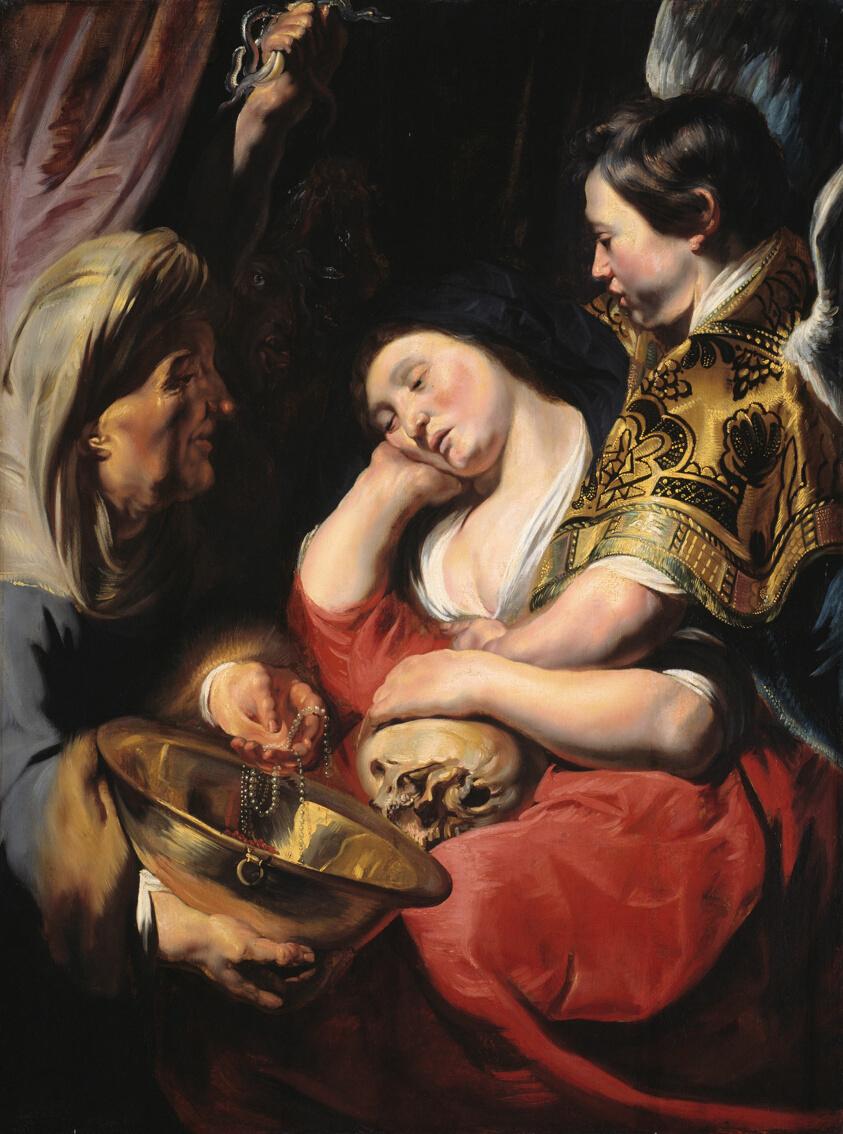
A snake or serpent almost always signals temptation, sin, or evil in Western religious painting — most directly as the tempter in the Garden of Eden, but also more broadly as a symbol of deceit, heresy, or the devil himself.
The serpent's central meaning comes straight from Genesis: the creature that tempts Eve with the forbidden fruit, and by extension the vehicle through which sin enters the world. Painters of the Fall almost universally include it coiled around the Tree of Knowledge, often given a human or semi-human face to sharpen the sense of cunning deception.
Outside the Eden scene, a serpent underfoot — crushed beneath the Virgin Mary's heel, for instance — draws on a separate but related tradition (from Genesis 3:15) reading Mary as the one who reverses the sin the serpent first caused. A serpent can also appear more generally as an attribute of specific vices or, in Northern art especially, as a marker of witchcraft and the demonic — a meaning that becomes explicit in Hieronymus Bosch's crowded infernal landscapes, where serpentine and hybrid creatures multiply across his hellscapes as agents of torment and moral chaos.
Serpent in the collection
Paintings in the catalog documented as featuring this symbol.