Apple
The forbidden fruit of Eden — though the Bible itself never names the fruit an apple, a tradition that developed over centuries and became the standard visual shorthand for original sin.
Genesis describes only "the fruit of the tree," not an apple specifically — the identification is a later Western tradition, reinforced by a pun in Latin, where malum can mean both "apple" and "evil." By the time panel painting flourished in the 15th century, the apple was the settled visual convention, appearing in Adam and Eve's hands at the moment of the Fall or already half-eaten as proof of the transgression.
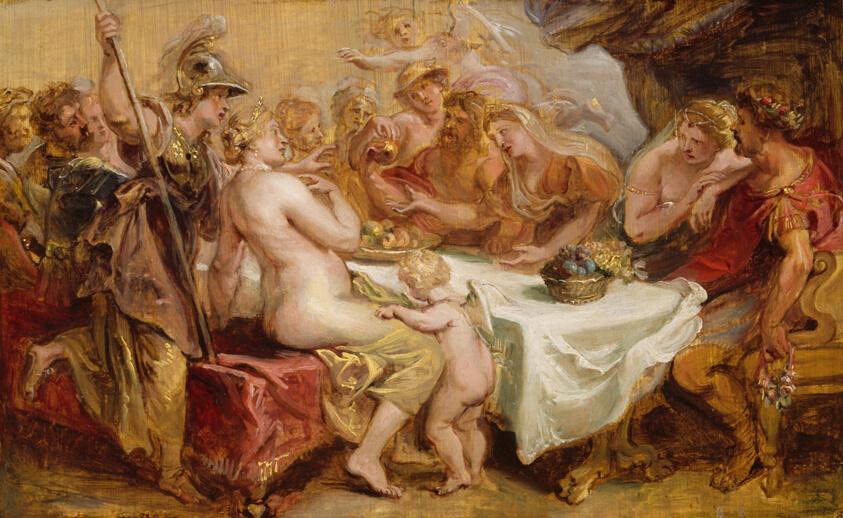
Outside Eden scenes, an apple can carry a very different, classical meaning — as the golden apple of the Judgment of Paris, tying it instead to vanity, beauty contests, and the mythological chain of events that led to the Trojan War. Context (a serpent and a tree, versus three goddesses and a shepherd) is what tells a viewer which tradition is in play.
Apple in the collection
Paintings in the catalog documented as featuring this symbol.