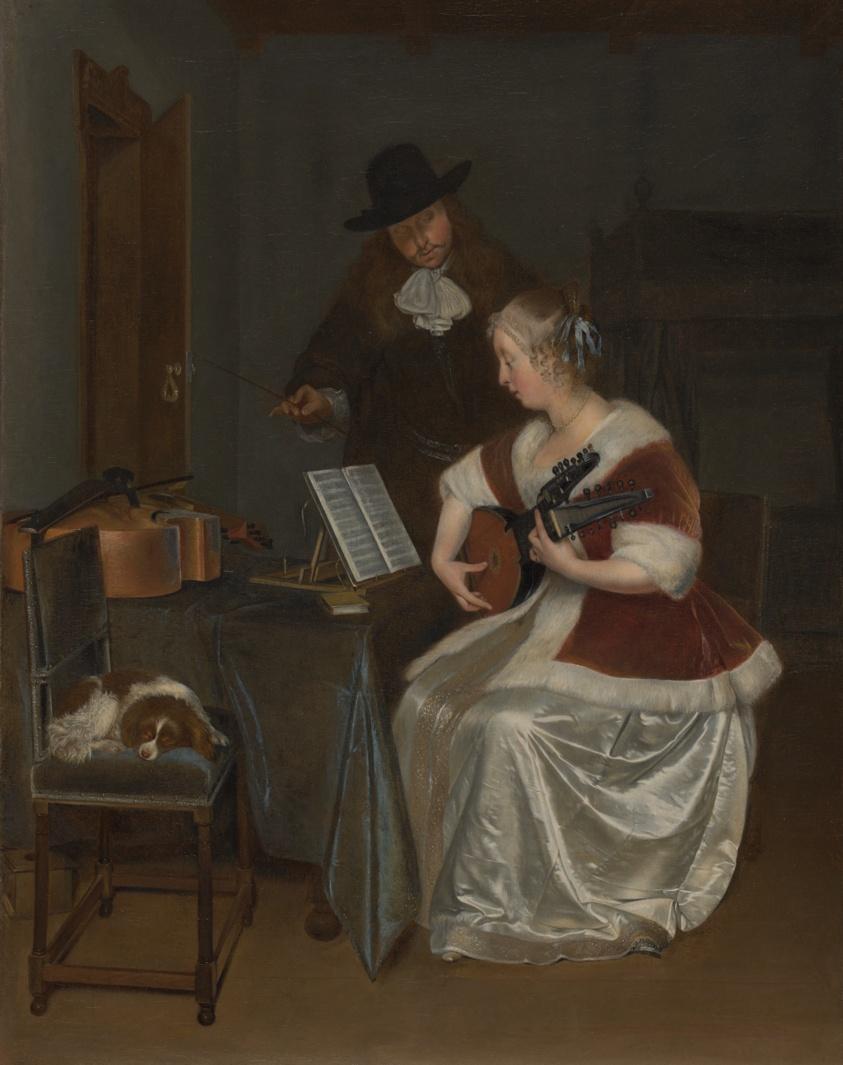
The Music Lesson
Gerard ter Borch the Younger
878 likes128 comments
Paintale uses cookies for essential site functionality and, where enabled, to serve relevant advertising via Google AdSense. You can accept all cookies or reject non-essential ones. See our Privacy Policy for details.
Now viewing
The Entombment
Guercino
Period
1650-1700
Theme
Portrait
Medium
Oil on canvas
Current Location
Art Institute of Chicago, Chicago
The Story
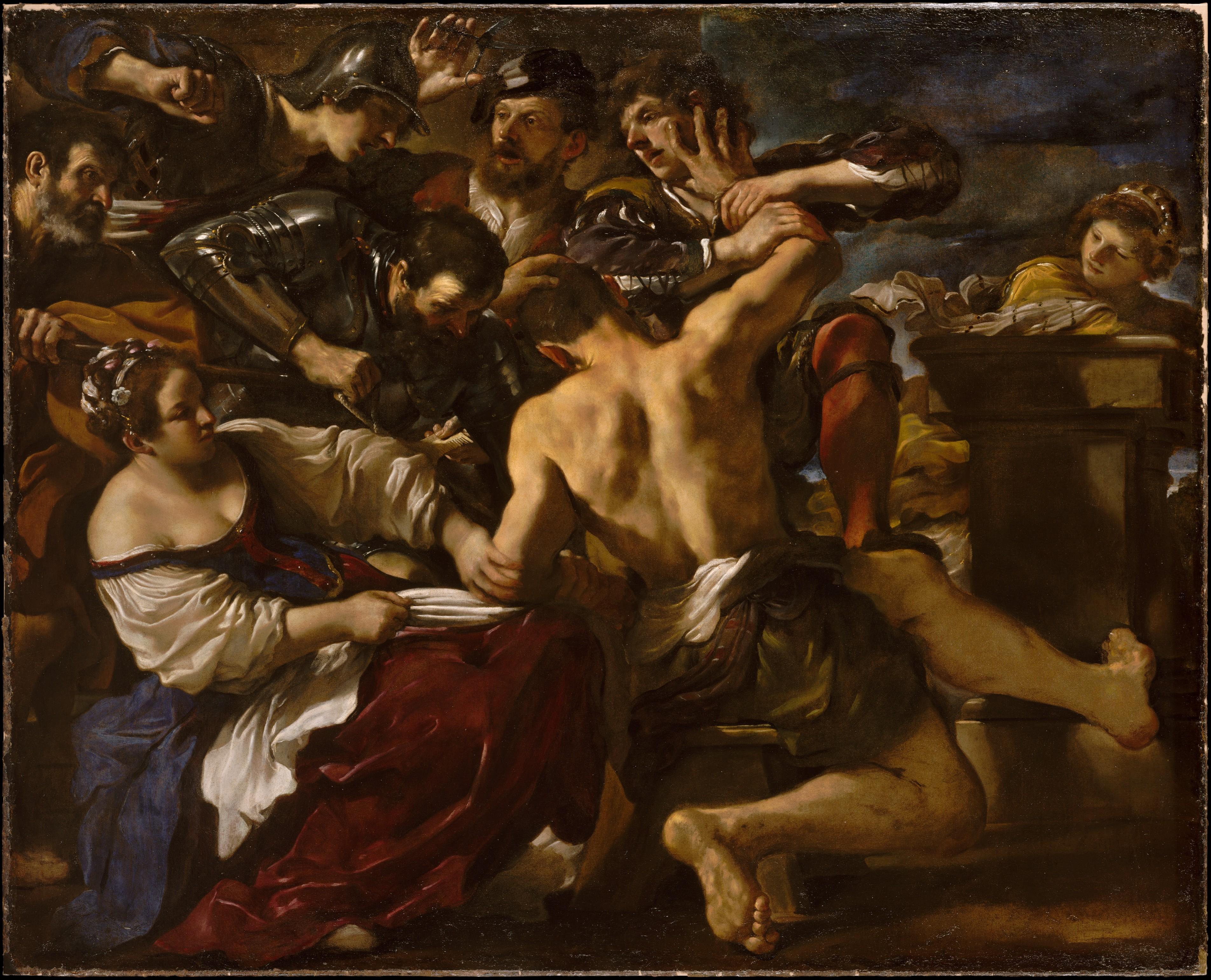
Guercino’s career is unusually well documented, in part due to the survival of his account books, which reveal that he charged a set amount for each figure in a picture. According to the entry for this painting, the client wished to pay only for one full-length, one bust-length, and three half-length figures. Guercino’s moving composition attests to his resourcefulness in overcoming such restrictions. Christ and the attendant mourners are depicted with compelling restraint and in accord with the patron’s budget.
Created in 1656 during the 1650-1700 period, this work belongs firmly within the portrait tradition. Guercino worked at a moment when the rivalry between Catholic Baroque drama and Protestant restraint reshaped what a painting could mean. Every gesture, fabric, and gleam of light was decoded by contemporary viewers like a private language.
As Oil on canvas (146.7 × 221.2 cm (57 3/4 × 87 1/16 in.); Framed: 172.7 × 247 × 8.9 cm (68 × 97 1/4 × 3 1/2 in.)), the work shows the tool marks and layering choices typical of Guercino's output in this period — decisions about ground, underpainting, and glaze that a photograph can only partly convey.
Look closely and the painting opens up. Objects you might pass over — a folded letter, a half-drawn curtain, the angle of a glance — were placed to be read. Likeness was only part of the job; the painting also had to argue for the sitter's place in the world.
Today the painting is held by Art Institute of Chicago in Chicago, where it remains a touchstone for understanding Guercino's contribution to Western art. It has been studied, copied, restored, and argued over for centuries — proof that great paintings keep generating new readings long after their creators have gone.
“A silence so complete it becomes its own witness.”
Guercino’s career is unusually well documented, in part due to the survival of his account books, which reveal that he charged a set amount for each figure in a picture. According to the entry for this painting, the client wished to pay only for one full-length, one bust-length, and three half-length figures. Guercino’s moving composition attests to his resourcefulness in overcoming such restrictions. Christ and the attendant mourners are depicted with compelling restraint and in accord with the patron’s budget.
Wilson L. Mead Fund
Technique: oil painting, painting, painting (image making), painting techniques.
Painted for anonymous "Cavaliere Veneziano," 1656 [acc. to Guercino account book, see Stone, 1991]. Colonna Collection, Rome by 1783 [no. 205 in 1783 inventory]. Sold from Colonna collection to Giovanni de' Rossi (Du Rubeis) [Mahon, 1968] after 1795 [listed in 1795 Colonna inventory]. Probably sold by Giovanni de' Rossi (de Rubeis) to Sir Simon Clarke, by 1802 [Salerno (1988), also engraved in 1802 by P. Fontana]. Probably sold by Clarke to James Irvine as agent for William Buchanan by 1803 [Buchanan (1824) pp. 117-118]. John Humble. Probably consigned by Humble for sale by F. C. DeBligney, London, March 15, 1809, no. 94 but likely bought in [Getty provenance index]. Sold at Humble sale, Christie's, London, April 11, 1812, no. 56 to Francis Charles Seymour-Conway, Earl of Yarmouth (later the 3rd Marquess of Hartford) for 430 guineas [Mahon, 1968]. Sold by Mr. Yates to Thomas Bulkeley Bulkeley-Owen (died 1867), Tedsmore Hall, Oswestry, England, 1818 [acc. Owen sale cat.]. Bought in, his sale, Christie's, London, April 30,1868. By descent to his eldest son, Bulkeley Hatchett Bulkeley-Owen (died 1868), Tedsmore Hall; by descent to his brother, Rev. Thomas Mainwaring Bulkeley Bulkeley-Owen (died 1910), Tedsmore Hall; by descent to his twin sister, Mrs. Rev. Edward Jacson, (Frances Marianne Eliza), Tedsmore Hall; by descent to her son, Rev. Owen Fitzherbert Jacson (died 1935), Tedsmore Hall; by descent to his son, Fitzherbert Edward Shallcross Jacson, Tedsmore Hall; by descent to his wife, Mrs. F. E. S. Jacson (née Ruth Henrietta Hanmer). Julius H. Weitzner, New York. Sold by Weitzner to the Art Institute, 1956.
Art Institute of Chicago, Chicago. View on the museum’s official page.
See more works at Art Institute of Chicago or browse the full Guercino collection.
A restrained palette and sculptural lighting create a solemn geometry. The wooden crate and letter anchor the narrative with journalistic precision.
Sources
Keep Exploring
More paintings like this
Gerard ter Borch the Younger
Guercino
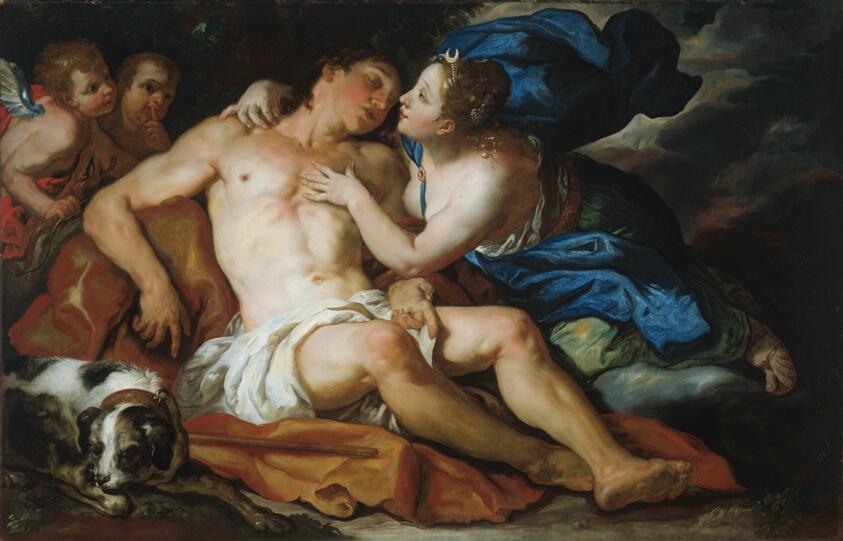
Johann Michael Rottmayr
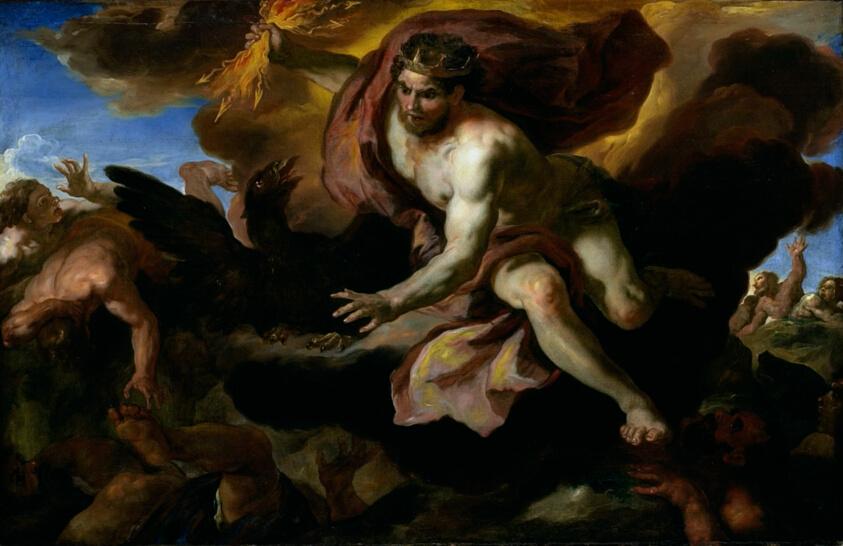
Johann Michael Rottmayr
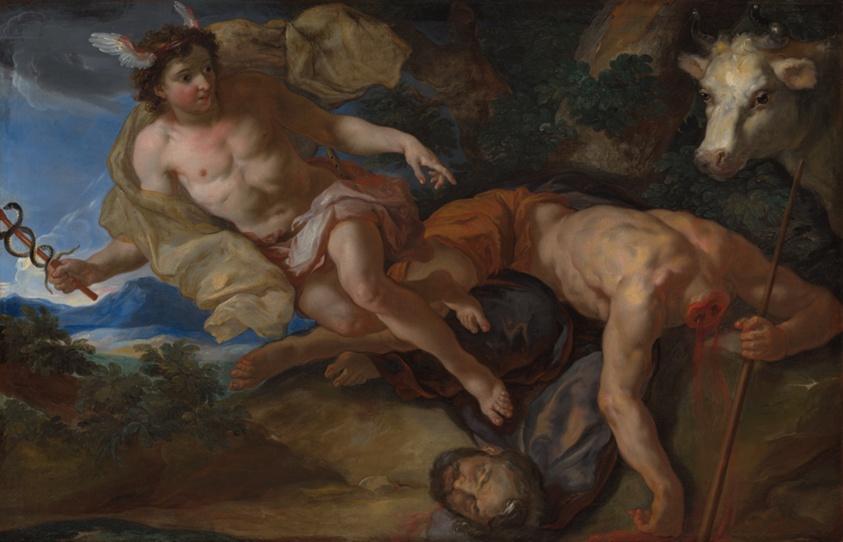
Johann Michael Rottmayr
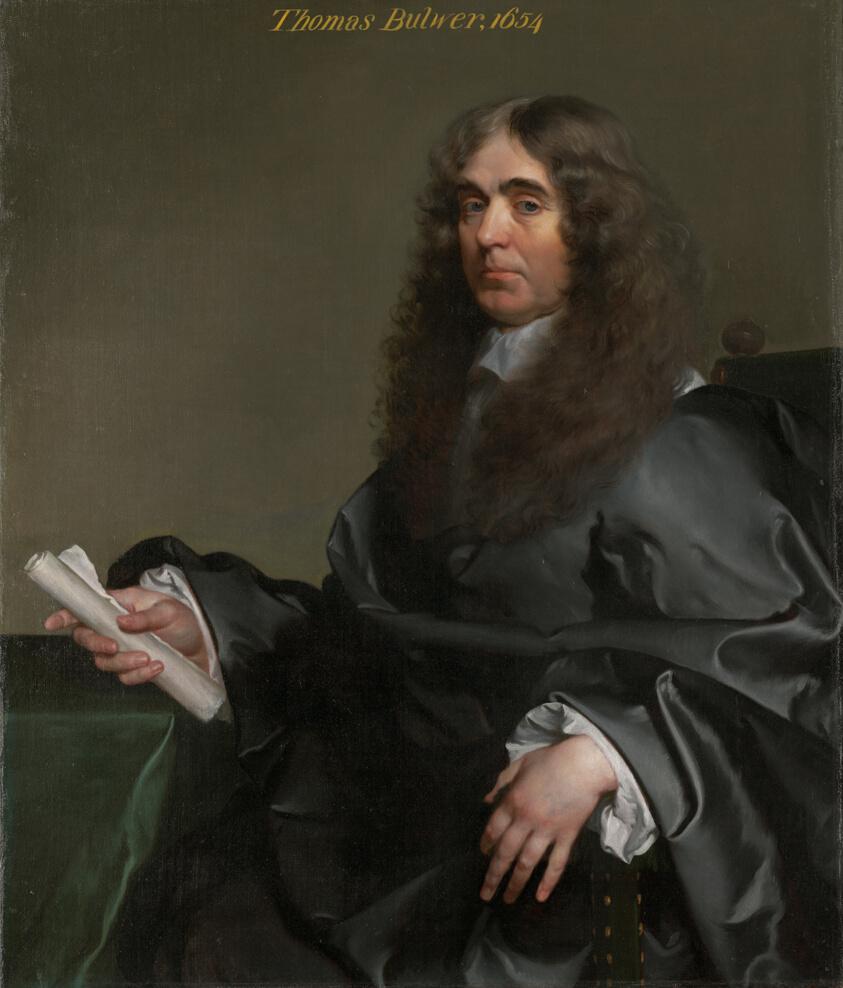
Gerard van Soest
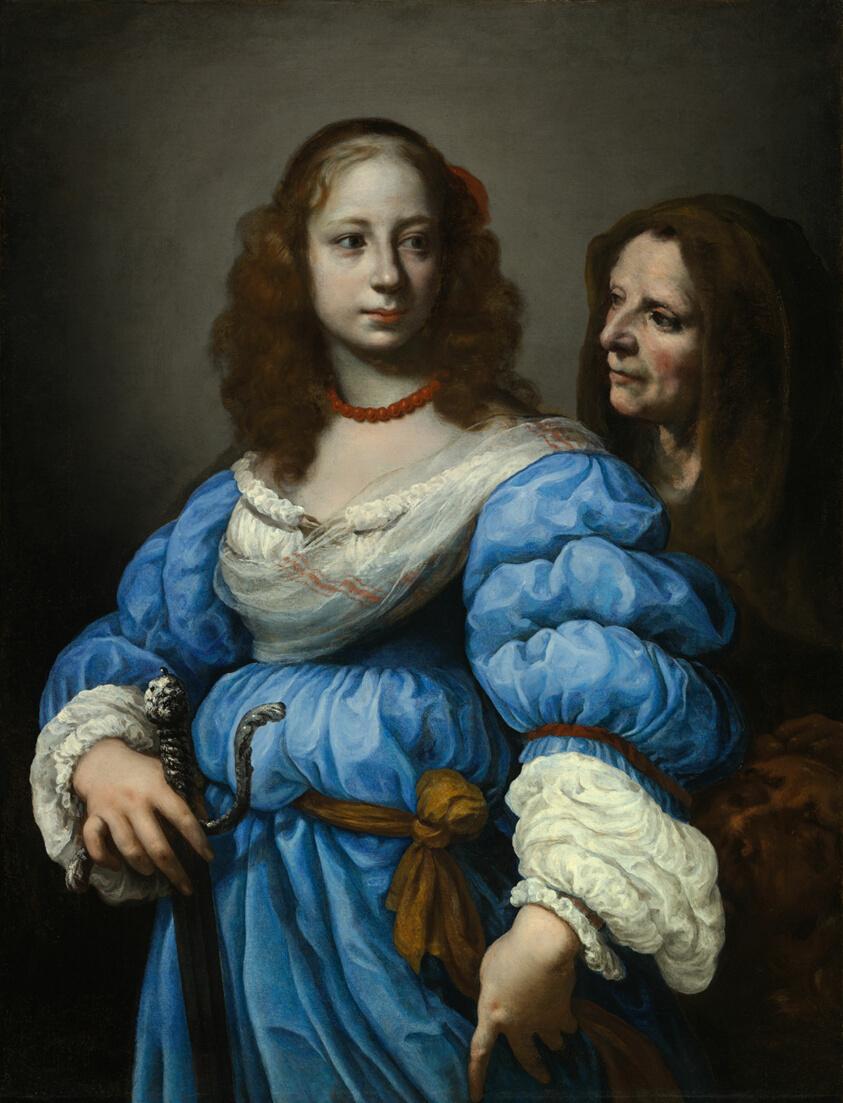
Felice Ficherelli
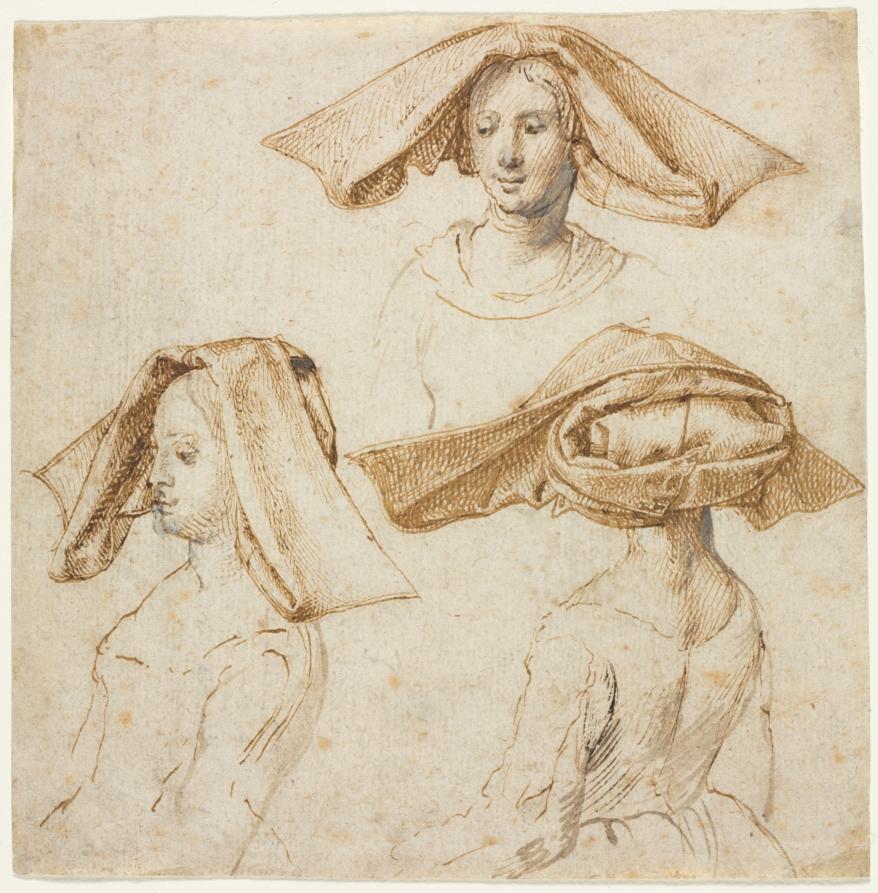
Anonymous