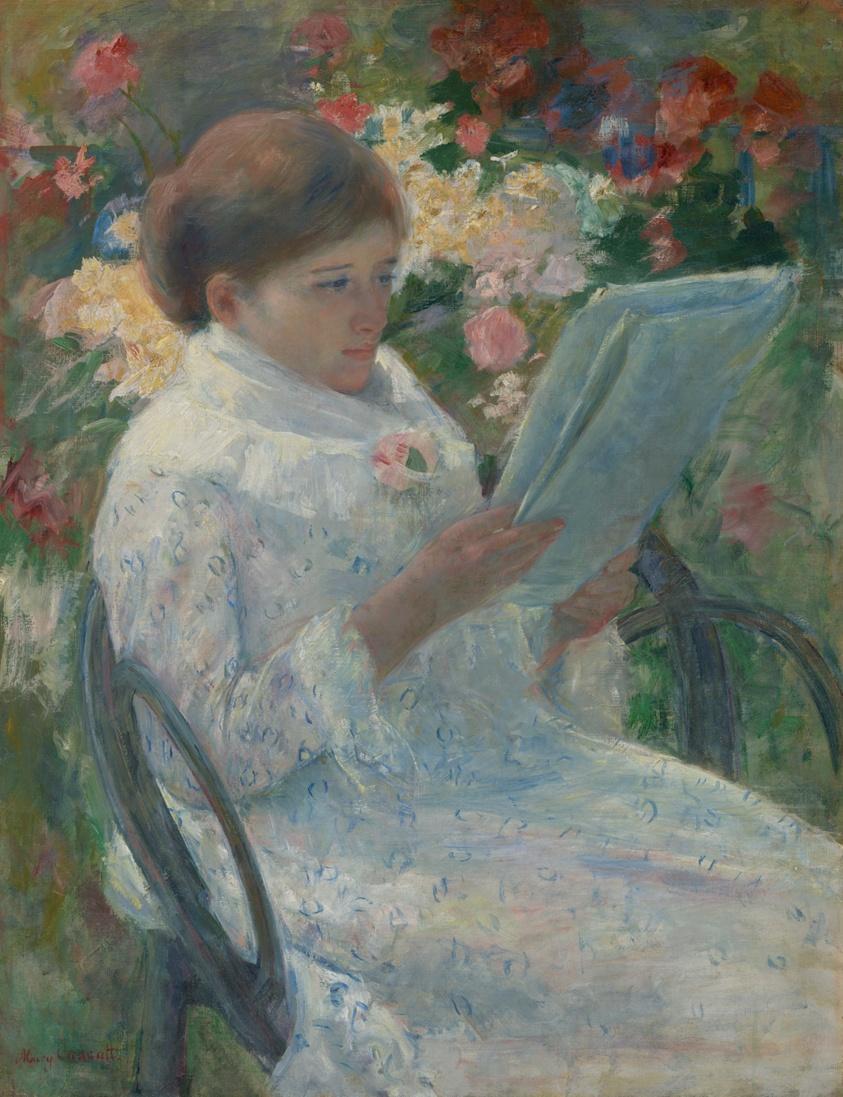
On a Balcony
Mary Cassatt
1431 likes121 comments
Paintale uses cookies for essential site functionality and, where enabled, to serve relevant advertising via Google AdSense. You can accept all cookies or reject non-essential ones. See our Privacy Policy for details.
Now viewing
After the Bullfight
Mary Cassatt
Period
1871-1900
Theme
Daily Life
Medium
Oil on canvas
Current Location
Art Institute of Chicago, Chicago
The Story
Mary Cassatt chose a quintessentially Spanish subject, executing this composition of a bullfighter, or torero, in full regalia during an extended stay in Seville. Having trained in Philadelphia and Paris, Cassatt ventured to Spain to study the country’s Renaissance and Baroque works and to follow the path of French avant-garde artists like Édouard Manet. Depicting the performer at a relaxed moment, far removed from the spectacle and violence of the ring, Cassatt omitted narrative detail.
Instead, with a modernist sensibility, she focused on the male figure in a casual pose, employing vigorous brushwork and rich pigment to describe the bullfighter’s costume and suggest his characteristic bravado.
Working in Oil on canvas at 110.5 × 93.4 cm (43 1/2 × 36 3/4 in.), Mary Cassatt constructs depth through value contrast rather than outline, letting figures emerge from darkness the way they would under candlelight or through a shuttered window.
Look closely and the painting opens up. Objects you might pass over — a folded letter, a half-drawn curtain, the angle of a glance — were placed to be read. Even the everyday is loaded: a basin, a candle, a worn shoe become small monuments to a vanished daily world.
Housed at Art Institute of Chicago in Chicago, the painting has passed through the hands of collectors, dealers, and institutions before reaching public view — a provenance that is itself part of the object's story.
“A silence so complete it becomes its own witness.”
Mary Cassatt chose a quintessentially Spanish subject, executing this composition of a bullfighter, or torero, in full regalia during an extended stay in Seville. Having trained in Philadelphia and Paris, Cassatt ventured to Spain to study the country’s Renaissance and Baroque works and to follow the path of French avant-garde artists like Édouard Manet. Depicting the performer at a relaxed moment, far removed from the spectacle and violence of the ring, Cassatt omitted narrative detail. Instead, with a modernist sensibility, she focused on the male figure in a casual pose, employing vigorous brushwork and rich pigment to describe the bullfighter’s costume and suggest his characteristic bravado.
Bequest of Mrs. Sterling Morton
Inscriptions: Signed recto, bottom-left, in paint: "M.S.C. / Seville / 1873"..
The artist, 1873; H. Teubner, Philadelphia, by 1878; John Ruderman, Montclair, NJ, dates unknown; Mr. and Mrs. Lewis Padawar, NY, until c. 1957; John Cunningham, New York, by September 1959; Hirschl & Adler Galleries, Inc., New York, September 1959; Mrs. Sterling Morton (1890-1969), Chicago, October 26, 1959; bequeathed to the Art Institute of Chicago, 1969.
Art Institute of Chicago, Chicago. View on the museum’s official page.
See more works at Art Institute of Chicago or browse the full Mary Cassatt collection.
A restrained palette and sculptural lighting create a solemn geometry. The wooden crate and letter anchor the narrative with journalistic precision.
Sources
Keep Exploring
More paintings like this
Mary Cassatt

Mary Cassatt
Jules Bastien-Lepage
Maxime Maufra
Georges Seurat
George Inness
Charles Gifford Dyer
William Merritt Chase