Self-Portrait with a Straw Hat (obverse: The Potato Peeler)
Vincent van Gogh
1472 likes142 comments
Paintale uses cookies for essential site functionality and, where enabled, to serve relevant advertising via Google AdSense. You can accept all cookies or reject non-essential ones. See our Privacy Policy for details.
Now viewing
Paris Street; Rainy Day
Gustave Caillebotte
Period
1871-1900
Theme
Portrait
Medium
Oil on canvas
Current Location
Art Institute of Chicago, Chicago
The Story
Paris Street; Rainy Day (French: Rue de Paris, temps de pluie) is a large 1877 oil painting by the French artist Gustave Caillebotte, now at the Art Institute of Chicago in Chicago, Illinois. The work shows a Parisian street scene of pedestrians in rainy weather crossing a boulevard intersection in the present-day Place de Dublin, a square in the eighth arrondissement. It is the best known of Caillebotte's several cityscapes linked to Paris's reconstruction under Napoleon III and Georges-Eugène Haussmann in the mid-19th century.
Paris Street exemplifies the artist's views on modernity. Caillebotte made a number of preliminary sketches in graphite and oil. The composition shows 24 mostly bourgeois pedestrians, dominated by a foreground couple with an umbrella, who are staring outside of the viewer's field of vision. The painting takes the form of a photorealistic cityscape, departing from the typical style of Impressionist art, representative of a Paris that appears austere and hostile to human interaction.
The physical object — Oil on canvas, 212.2 × 276.2 cm (83 1/2 × 108 3/4 in.); Framed: 241.3 × 306.1 × 10.2 cm (95 × 120 1/2 × 4 in.) — carries its own history of handling and restoration. Gustave Caillebotte's brushwork here moves between exacting description and looser, more suggestive passages, a balance typical of 19th-century American studio practice.
Look closely and the painting opens up. Objects you might pass over — a folded letter, a half-drawn curtain, the angle of a glance — were placed to be read. The sitter is constructed: clothes, pose, and attributes were chosen to project status, virtue, and lineage.
Housed at Art Institute of Chicago in Chicago, the painting has passed through the hands of collectors, dealers, and institutions before reaching public view — a provenance that is itself part of the object's story.
“A silence so complete it becomes its own witness.”
rue de Turin, rue Clapeyron, rue de Moscou, rain, man, woman.
This monumental painting is Gustave Caillebotte’s largest, most ambitious work and has been a visitor favorite since the Art Institute acquired it in 1964, well before the artist’s contributions to the Impressionist movement were widely recognized. Caillebotte captured a busy intersection of Paris that was only a short walk from his home. In fact, his paintings of Paris rarely depict areas beyond his familiar neighborhoods. Caillebotte demonstrated his affinity with the Impressionists through his subject of modern urban life but approached these settings with a more Realist technique. The dramatic cropping of the scene may have been inspired by the newly popularized medium of photography; the two central figures seem to be walking straight into the viewer as something captures their attention outside of the frame. At the time, artists rarely attempted to depict people in motion; Caillebotte carefully placed each of the background figures to evoke the feeling of bustling city streets. When he started exhibiting with the Impressionists, Caillebotte also focused on portraying the atmosphere of his scenes; here, instead of explicitly painting raindrops to indicate the weather, he suggests it through the incorporation of newly available retractable umbrellas and the subtle reflections on the wet cobblestones.
Charles H. and Mary F. S. Worcester Collection
Materials: oil paint, canvas.
Technique: oil painting, painting, painting techniques, painting (image making).
Inscriptions: Inscribed lower left: G. Caillebotte. 1877.
The artist (died 1894); by descent to Martial Caillebotte (brother) and Marie Minoret (Martial’s wife), Paris, 1894 [this and the two following per Portland Art Museum, Paintings from the Collection of Walter P. Chrysler, Jr., exh. cat. (Portland Art Association, 1956), p. 47. See also fact sheet provided by Wildenstein and Company, copy in curatorial object file]; placed with Georges Minoret (brother-in-law of Martial Caillebotte), Château de Montglat, Provins, France, 1900; Returned to Albert and Geneviève Chardeau (daughter of Martial Caillebotte), Paris, 1950; sold to Walter P. Chrysler, Jr., New York, 1954 [per J. Kirk T. Varnedoe and Thomas P. Lee, Gustave Caillebotte: A Retrospective Exhibition, with contributions by J. Kirk T. Varnedoe, Marie Berhaut, Peter Galassi, and Hilarie Faberman, exh. cat. (Museum of Fine Arts, Houston, 1976), p. 110]; sold to Wildenstein and Company, 1964 [per email from Joseph Baillio, Wildenstein and Company, copy in curatorial object file]; sold to the Art Institute of Chicago, 1964 [per minutes from the meeting of the Committee on Earlier Painting and Sculpture, November 25, 1964 and minutes from the meeting of the Board of Trustees, December 21, 1964, both on file in Institutional Archives, Art Institute of Chicago].
Art Institute of Chicago, Chicago. View on the museum’s official page.
See more works at Art Institute of Chicago or browse the full Gustave Caillebotte collection.
A restrained palette and sculptural lighting create a solemn geometry. The wooden crate and letter anchor the narrative with journalistic precision.
Sources
Keep Exploring
More paintings like this
Vincent van Gogh
Martin Johnson Heade
John Singer Sargent
John Singer Sargent
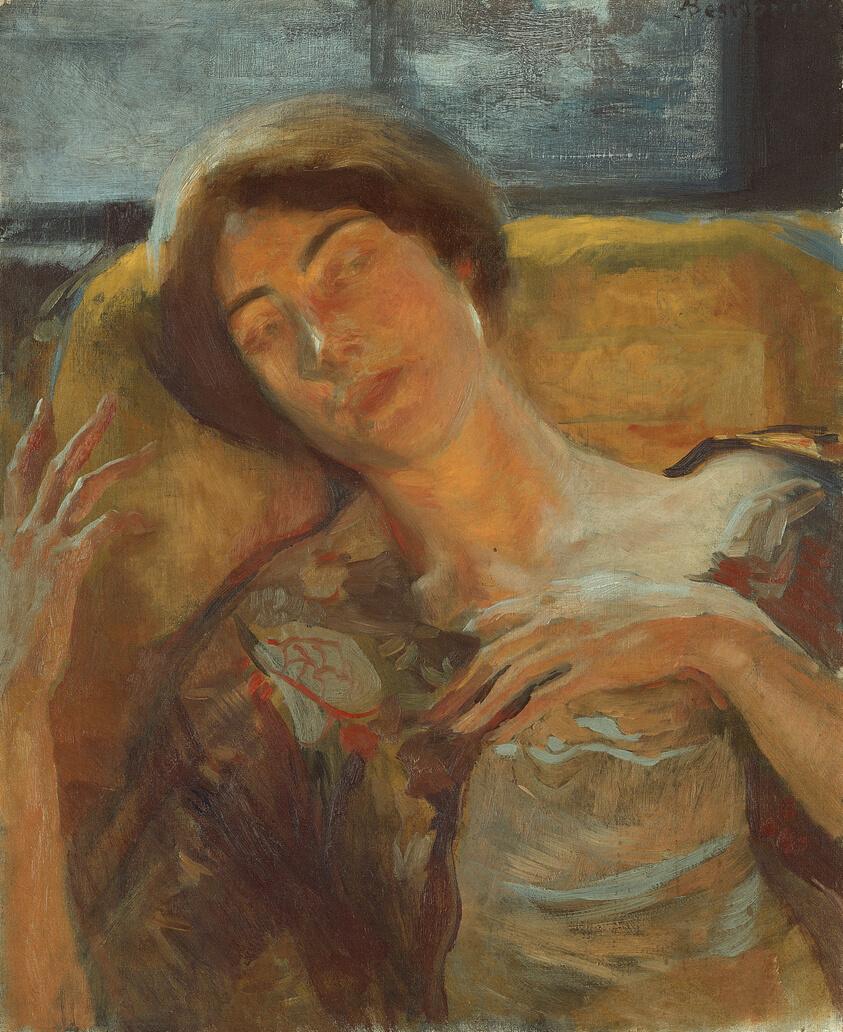
Albert Besnard
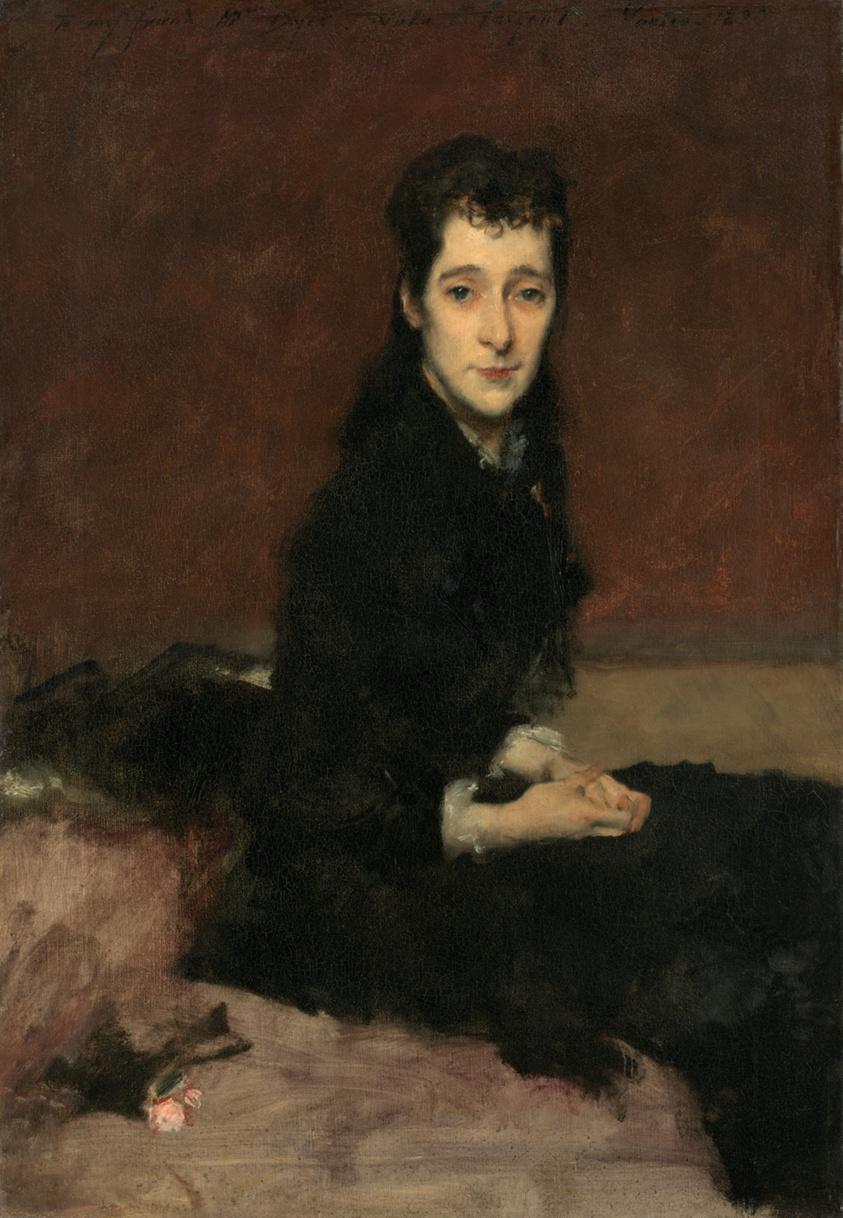
John Singer Sargent
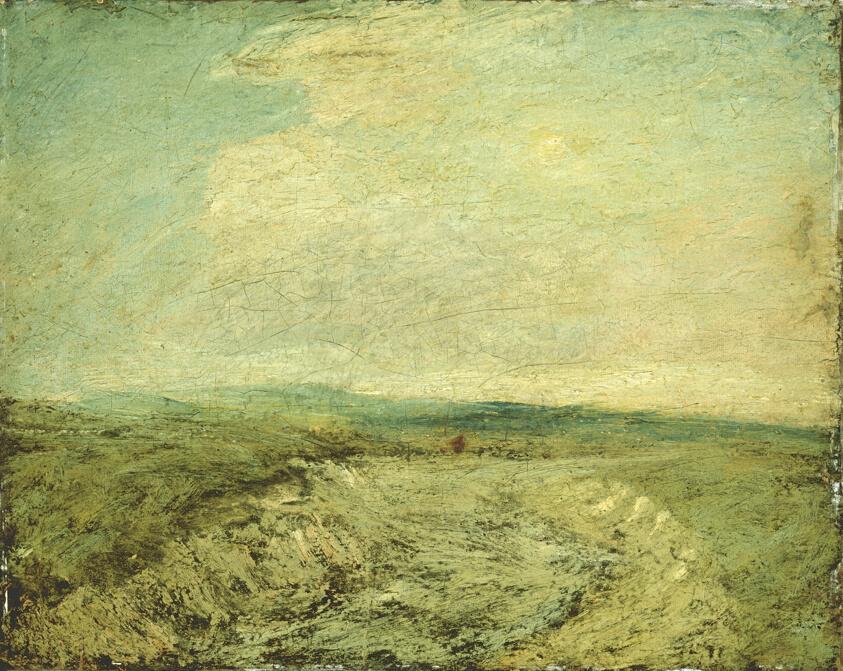
Albert Pinkham Ryder American
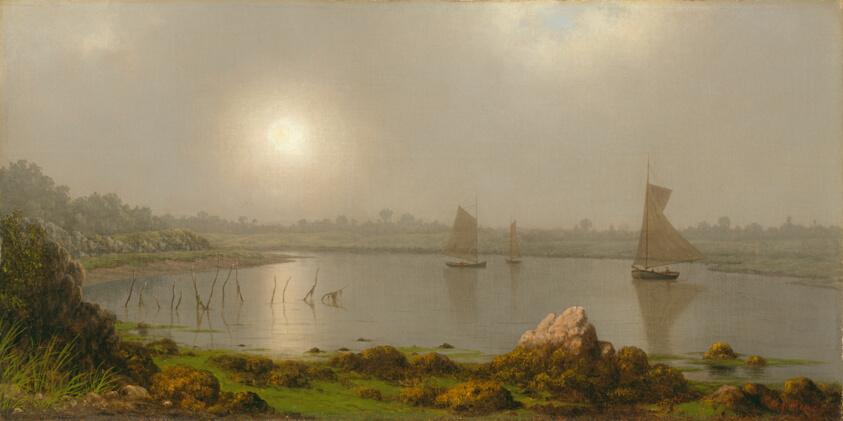
Martin Johnson Heade