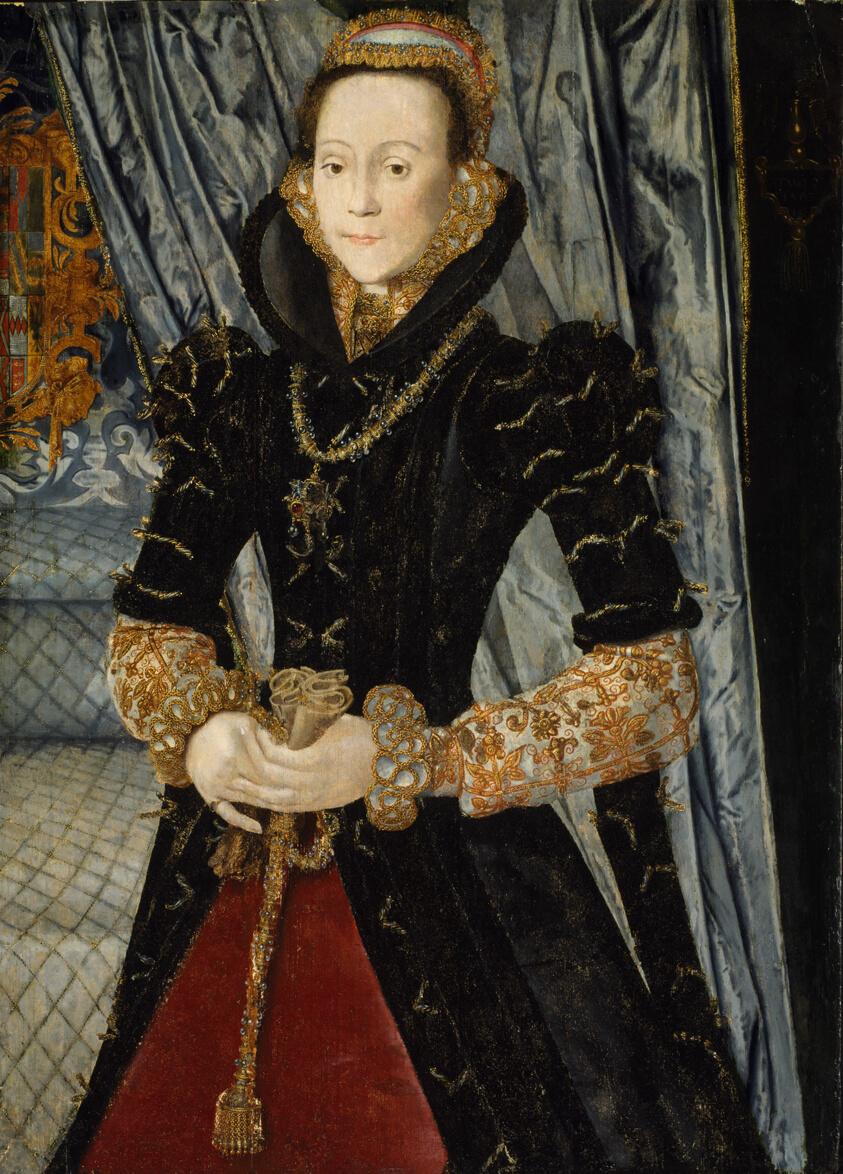
Portrait of a Lady of the Wentworth Family (Probably Jane Cheyne)
Hans Eworth
1514 likes144 comments
Paintale uses cookies for essential site functionality and, where enabled, to serve relevant advertising via Google AdSense. You can accept all cookies or reject non-essential ones. See our Privacy Policy for details.
Now viewing
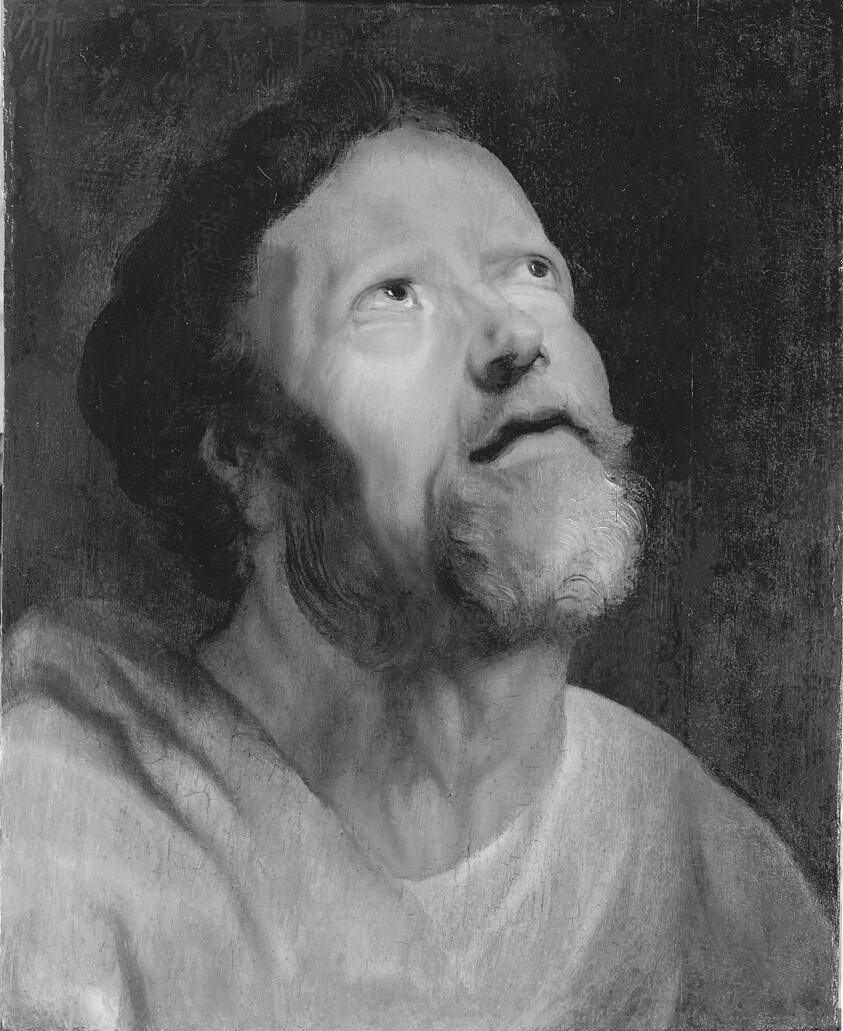
Study Head of a Bearded Man
Frans Floris, I
Period
1550-1600
Theme
Portrait
Medium
Oil on panel
Current Location
Art Institute of Chicago, Chicago
The Story
In the upper-left corner of this painting, just barely visible against the black background, a monogram reading FFF identifies the artist as Frans Floris, who operated a large and influential workshop in Antwerp. This panel served as a head study (possibly of Hercules), a technique Floris often used to work through expressions and characters for finished compositions. His practice anticipated the tronie—Dutch for “head”—studies popular in the 17th century among artists such as Rembrandt and Peter Paul Rubens.
Created in 1560 during the 1550-1600 period, this work belongs firmly within the portrait tradition. Frans Floris, I worked at a moment when the rediscovery of classical antiquity reshaped what a painting could mean. Every gesture, fabric, and gleam of light was decoded by contemporary viewers like a private language.
The physical object — Oil on panel, 46.5 × 33.6 cm (18 5/16 × 13 1/4 in.); Framed: 71.2 × 58.5 × 6.4 cm (28 × 23 × 2 1/2 in.) — carries its own history of handling and restoration. Frans Floris, I's brushwork here moves between exacting description and looser, more suggestive passages, a balance typical of Renaissance studio practice.
Look closely and the painting opens up. Objects you might pass over — a folded letter, a half-drawn curtain, the angle of a glance — were placed to be read. The sitter is constructed: clothes, pose, and attributes were chosen to project status, virtue, and lineage.
Art Institute of Chicago in Chicago now holds the work, where conservators and historians continue to revisit its condition and attribution. Each generation of scholarship adds a layer to how Frans Floris, I's output from this period is understood.
“A silence so complete it becomes its own witness.”
In the upper-left corner of this painting, just barely visible against the black background, a monogram reading FFF identifies the artist as Frans Floris, who operated a large and influential workshop in Antwerp. This panel served as a head study (possibly of Hercules), a technique Floris often used to work through expressions and characters for finished compositions. His practice anticipated the tronie—Dutch for “head”—studies popular in the 17th century among artists such as Rembrandt and Peter Paul Rubens.
Gift of Alfred and Isabel Bader
Technique: oil painting, painting, painting (image making), painting techniques, panel painting.
Inscriptions: Inscribed upper left: FFF.
Hans Jüngeling, The Hague, by 1961 [according to van de Velde 1975, pp. 234–35; and conversation of Martha Wolff with Alfred Bader, May 24, 2001]; sold to Alfred Bader, Milwaukee, 1964; sold, Christie’s, New York, May 31, 1990, lot 32; bought by the Art Institute of Chicago with funds given by Alfred and Isabel Bader, 1990
Art Institute of Chicago, Chicago. View on the museum’s official page.
See more works at Art Institute of Chicago or browse the full Frans Floris, I collection.
A restrained palette and sculptural lighting create a solemn geometry. The wooden crate and letter anchor the narrative with journalistic precision.
Sources
Keep Exploring
More paintings like this
Hans Eworth
Jacopo da Empoli
Follower of Jacob Jordaens
Anonymous
Albrecht Dürer
Albrecht Dürer
Albrecht Dürer
Albrecht Dürer