
Arrival of the Normandy Train, Gare Saint-Lazare
Claude Monet
650 likes120 comments
Paintale uses cookies for essential site functionality and, where enabled, to serve relevant advertising via Google AdSense. You can accept all cookies or reject non-essential ones. See our Privacy Policy for details.
Now viewing
Water Lilies
Claude Monet
Period
1901-1920
Theme
Tragedy & Death
Medium
Oil on canvas
Current Location
Art Institute of Chicago, Chicago
The Story
Water Lilies (French: Nymphéas [nɛ̃.fe.a]) is a series of approximately 250 oil paintings by French Impressionist Claude Monet (1840–1926). The paintings depict his flower garden at his home in Giverny, and were the main focus of his artistic production during the last 31 years of his life. Many of the works were painted while Monet suffered from cataracts.
Created in 1906, this work belongs firmly within the tragedy & death tradition of American painting. Claude Monet worked at a moment when the young republic was still deciding what its own art should look like — how much to borrow from Europe, how much to invent from its own landscape and daily life. Every gesture, fabric, and gleam of light was pitched at an audience learning to take American subjects seriously.
The physical object — Oil on canvas, 89.9 × 94.1 cm (35 3/8 × 37 1/16 in.); Framed: 103.2 × 107 × 5.8 cm (40 5/8 × 42 1/8 × 2 1/4 in.) — carries its own history of handling and restoration. Claude Monet's brushwork here moves between exacting description and looser, more suggestive passages, a balance typical of 19th-century American studio practice.
Look closely and the painting opens up. Objects you might pass over — a folded letter, a half-drawn curtain, the angle of a glance — were placed to be read. Light hardens into edge, drapery becomes shroud, and the body is staged like an argument about mortality.
Housed at Art Institute of Chicago in Chicago, the painting has passed through the hands of collectors, dealers, and institutions before reaching public view — a provenance that is itself part of the object's story.
“A silence so complete it becomes its own witness.”
Nymphaea.
Little did Claude Monet know that the water garden he created three years after buying his Giverny, France, property in 1890 would become his primary inspiration over the next two and a half decades. These paintings, numbering around 250, mark Monet’s artistic journey from more straightforward depictions of the pond spanned by the wooden Japanese bridge to the monumental and near-abstract series on the water lily theme he made in preparation for his murals at the Musée de l’Orangerie in Paris between 1914 and 1926. Water Lilies, one of a group of paintings on the subject made between 1903 and 1908, comes at the midpoint of Monet’s developing style and spatial experimentations. The nearly square format underscores his move away from painting the conventional zones of land, sky, and water to focus solely on the water’s surface. Clusters of water lilies at bottom left and top right frame a watery path, while the water’s surface reflects trees and clouds. Although the dreamlike quality of floating forms might seem to be a natural development for the artist, he considered these works “an obsession,” a sentiment borne out by technical examinations on the Art Institute’s canvas, revealing many significant changes made to the painting in progress.
Mr. and Mrs. Martin A. Ryerson Collection
Technique: oil painting, painting techniques, painting, painting (image making).
Inscriptions: Inscribed lower right: Claude Monet 1906.
The artist (d. 1926); sold to Durand-Ruel, Paris (3/4 interest), and Bernheim-Jeune, Paris (1/4 interest), June 3, 1909, for 14,000 francs [this and the following per Durand-Ruel, Paris, stock book for 1901–13 (no. 9082, as Les nymphéas, paysage d’eau, série de 1906), as confirmed by Paul-Louis Durand-Ruel and Flavie Durand-Ruel, Durand-Ruel Archives, to the Art Institute of Chicago, Feb. 21, 2013, curatorial object file]; sold to Henri Bernstein, Paris, May 29, 1909, for 20,000 francs [see previous: the Durand-Ruel Archives notes that “the apparent chronological anomaly between the dates of the purchase and of the sale is not unusual”]; sold to Durand-Ruel, Paris, Aug. 9, 1909, for 20,000 francs [per Durand-Ruel, Paris, stock book for 1901–13 (no. 9134, as Les nymphéas, paysage d’eau, série de 1906), as confirmed by Paul-Louis Durand-Ruel and Flavie Durand-Ruel, Durand-Ruel Archives, to the Art Institute of Chicago, Feb. 21, 2013, curatorial object file]; on deposit to Durand-Ruel, New York, Apr. 1911 [per Durand-Ruel, New York, deposit book for 1894–1925 (no. 7606, as Les nymphéas, paysage d’eau, série de 1906), as confirmed by Paul-Louis Durand-Ruel and Flavie Durand-Ruel, Durand-Ruel Archives, to the Art Institute of Chicago, Feb. 21, 2013, curatorial object file]; sold to Durand-Ruel, New York, Feb. 10, 1914 [this and the following per Durand-Ruel, New York, stock book for 1904–24 (no. 3768, as Les nymphéas, paysage d’eau, série de 1906), as confirmed by Paul-Louis Durand-Ruel and Flavie Durand-Ruel, Durand-Ruel Archives, to the Art Institute of Chicago, Feb. 21, 2013, curatorial object file]; sold to Martin A. Sold by Durand-Ruel, New York, to Martin A. Ryerson (d. 1932), Chicago, Feb. 10, 1914, for $5,000 [see previous; also a purchase receipt on Durand-Ruel letterhead, dated February 10, 1914, details that this painting (no. 3768, Monet, Les nymphéas, paysage d’eau, 1906) was acquired by M. A. Ryerson, in addition to two other paintings (no. 3668, Monet, La cabane de douaniers, 1897 (cat. 35); and no. 3646, Monet, Waterloo Bridge, London,1903) (cat. 39) for $20,000, photocopy in curatorial object file]; bequeathed to the Art Institute of Chicago, 1933.
Art Institute of Chicago, Chicago. View on the museum’s official page.
See more works at Art Institute of Chicago or browse the full Claude Monet collection.
A restrained palette and sculptural lighting create a solemn geometry. The wooden crate and letter anchor the narrative with journalistic precision.
Sources
Keep Exploring
More paintings like this
Claude Monet
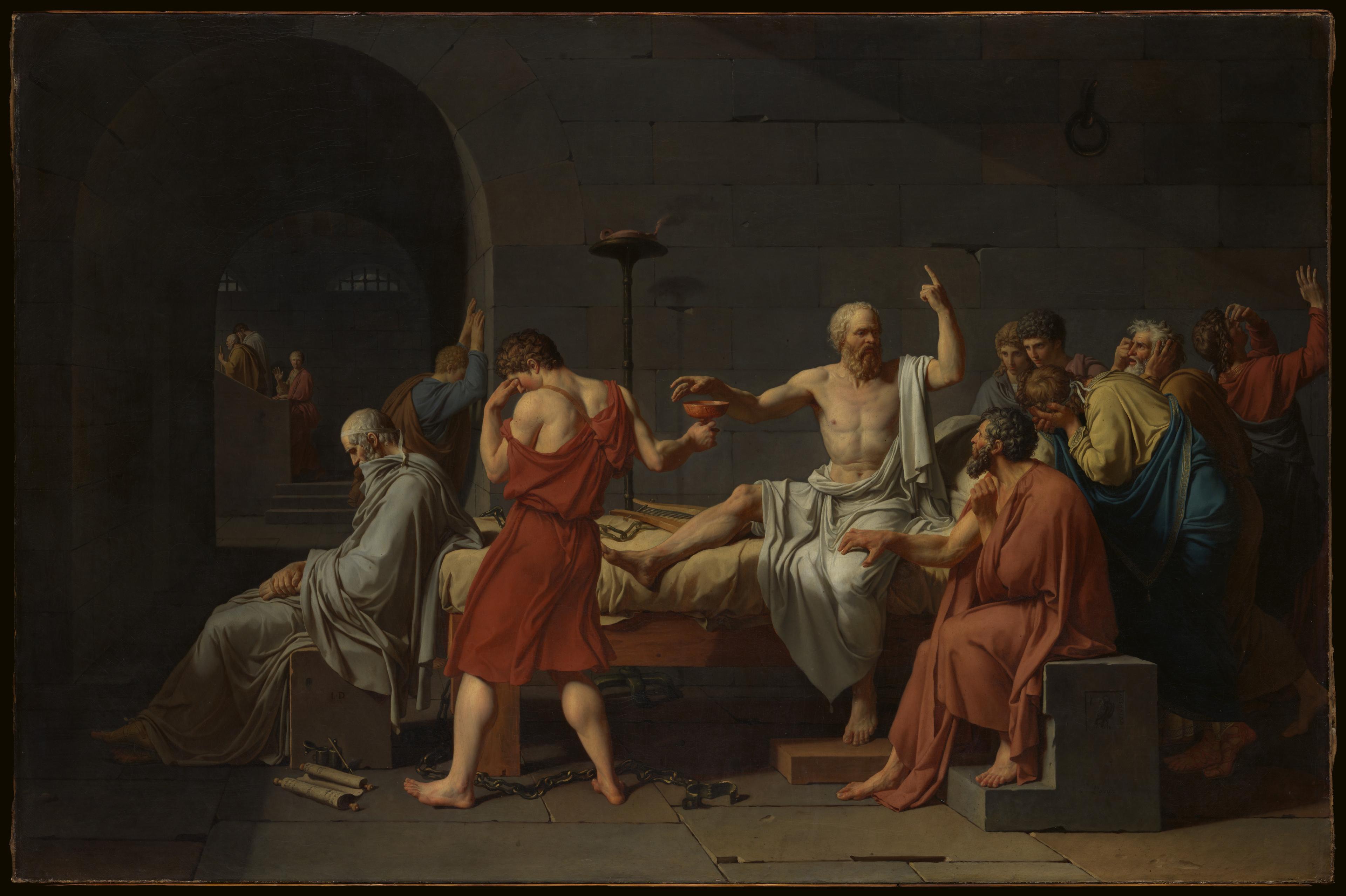
Jacques Louis David
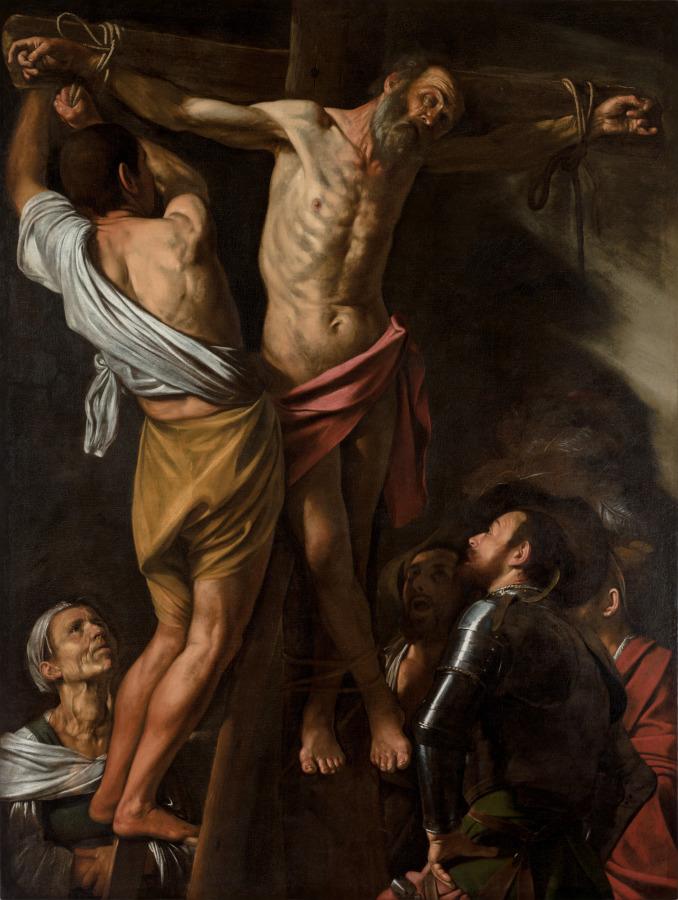
Caravaggio
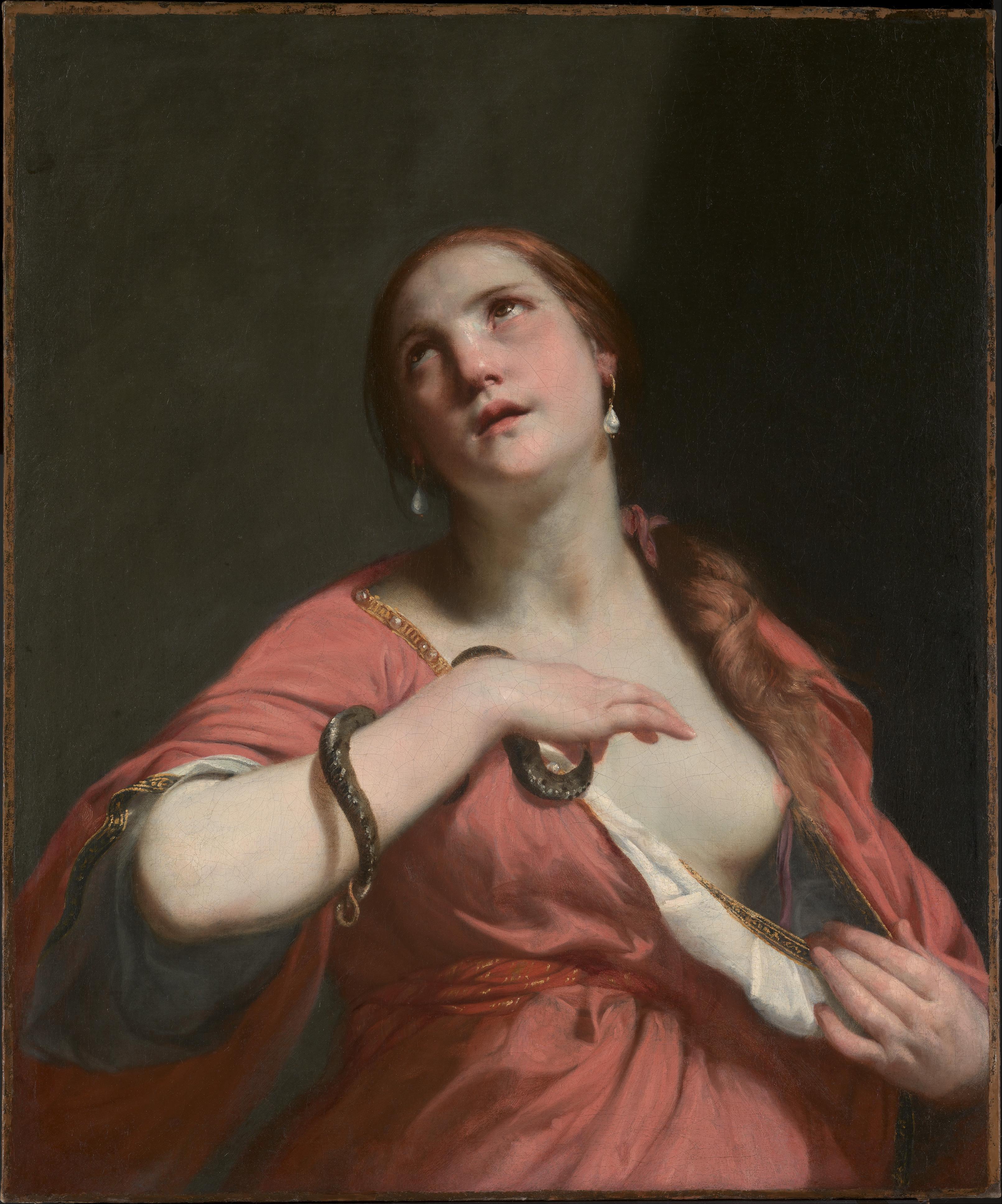
Guido Cagnacci

Sandro Botticelli

Sandro Botticelli

Hieronymus Bosch

Hieronymus Bosch