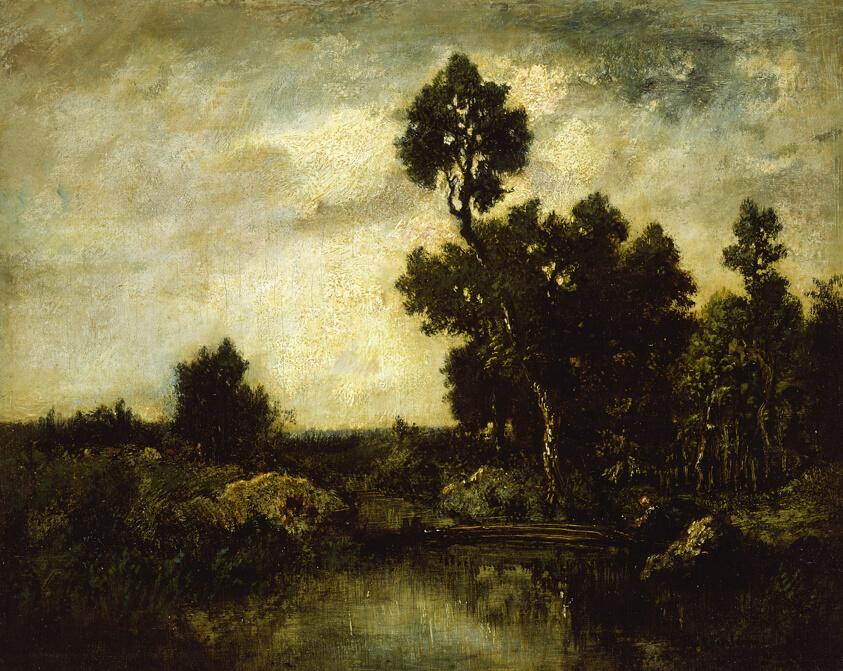
Landscape
Théodore Rousseau
1346 likes76 comments
Paintale uses cookies for essential site functionality and, where enabled, to serve relevant advertising via Google AdSense. You can accept all cookies or reject non-essential ones. See our Privacy Policy for details.
Now viewing
The Coast of Labrador
William Bradford
Period
1831-1870
Theme
Landscape
Medium
Oil on canvas
Current Location
Art Institute of Chicago, Chicago
The Story
William Bradford devoted the bulk of his career to painting Arctic scenes like The Coast of Labrador. Rendered in minute detail and suffused with light, the artist’s Arctic compositions share stylistic motifs with John Frederick Kensett’s Luminist views of the Rhode Island coast. Bradford first traveled to Labrador between 1854 and 1857; it was not until 1861, however, that the region became his main source of inspiration. He returned to Labrador repeatedly over the next eight years.
Signed and dated 1866, this painting probably derives from a number of sketches he accumulated during an 1865 journey, and it attests to Bradford’s interest in the diverse light effects and rocky landscape of the Arctic.
As Oil on canvas (72 × 113.3 cm (28 3/8 × 44 5/8 in.)), the work shows the tool marks and layering choices typical of William Bradford's output in this period — decisions about ground, underpainting, and glaze that a photograph can only partly convey.
Look closely and the painting opens up. Objects you might pass over — a folded letter, a half-drawn curtain, the angle of a glance — were placed to be read. Weather and light are the real subject — the artist is tracking a specific, fleeting atmospheric moment rather than an idealized, generic view.
Art Institute of Chicago in Chicago now holds the work, where conservators and historians continue to revisit its condition and attribution. Each generation of scholarship adds a layer to how William Bradford's output from this period is understood.
“A silence so complete it becomes its own witness.”
William Bradford devoted the bulk of his career to painting Arctic scenes like The Coast of Labrador. Rendered in minute detail and suffused with light, the artist’s Arctic compositions share stylistic motifs with John Frederick Kensett’s Luminist views of the Rhode Island coast. Bradford first traveled to Labrador between 1854 and 1857; it was not until 1861, however, that the region became his main source of inspiration. He returned to Labrador repeatedly over the next eight years. Signed and dated 1866, this painting probably derives from a number of sketches he accumulated during an 1865 journey, and it attests to Bradford’s interest in the diverse light effects and rocky landscape of the Arctic.
Ada Turnbull Hertle Fund
Inscriptions: Signed and dated lower right: "Wm Bradford/1866".
Henry H. Brooks, Boston, by 1981; Alfred J. Walker, Boston, 1981; Vose Galleries, Boston, 1981; Alfred T. Morris, Providence, Rhode Island, 1981; Adams Davidson Galleries, Washington, DC, 1983; Marshall Field, Chicago, 1983; the Art Institute of Chicago, 1983.
Art Institute of Chicago, Chicago. View on the museum’s official page.
See more works at Art Institute of Chicago or browse the full William Bradford collection.
A restrained palette and sculptural lighting create a solemn geometry. The wooden crate and letter anchor the narrative with journalistic precision.
Sources
Keep Exploring
More paintings like this
Théodore Rousseau
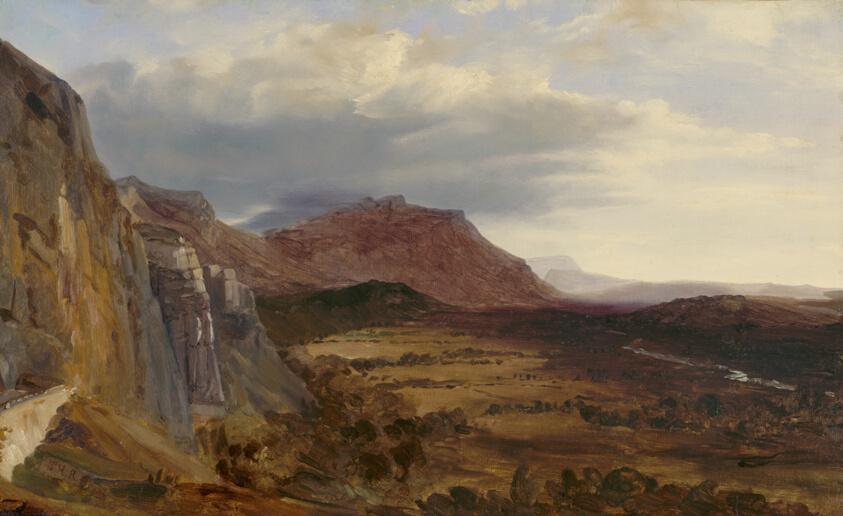
Théodore Rousseau
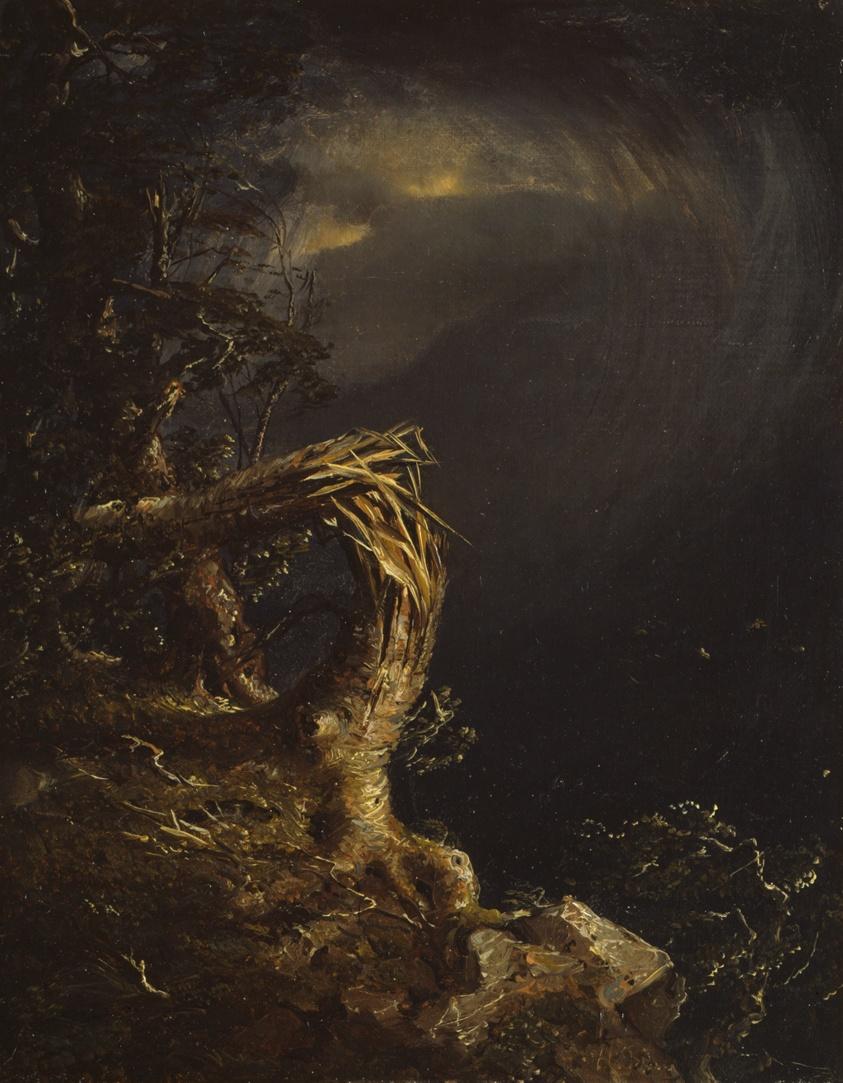
Jasper Francis Cropsey
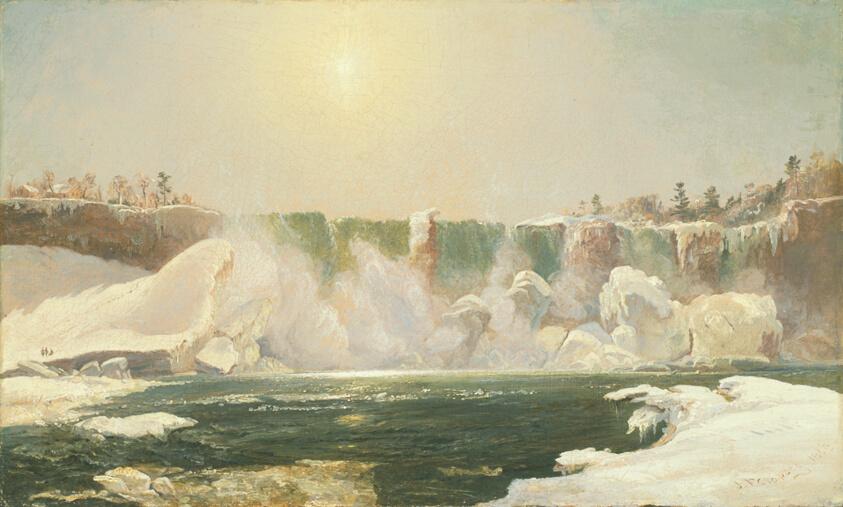
Jasper Francis Cropsey American
Asher B. Durand American
Sanford Robinson Gifford
Thomas Cole
Thomas Doughty American