Etching
A printmaking technique in which an artist scratches a design through a protective wax coating on a metal plate, then bathes the plate in acid so it bites the exposed lines into the metal, producing a printable image.
Etching gave painters a much freer, more drawing-like line than the older technique of engraving, since cutting through soft wax with a needle is far closer to sketching with a pen than gouging directly into hard copper. That freedom is a large part of why Rembrandt, who produced roughly 300 etchings across his career, treated the medium as a genuine second art form rather than a reproductive afterthought — his etched lines have the same searching, exploratory quality as his drawings.
Because a single etched plate can be re-inked and printed many times, the technique also let images circulate far beyond what any painted original could reach — an etching sold for a fraction of a painting's price could still carry an artist's composition, and reputation, into homes and print shops across Europe.
Etching in the collection
Paintings in the catalog documented as using this technique.
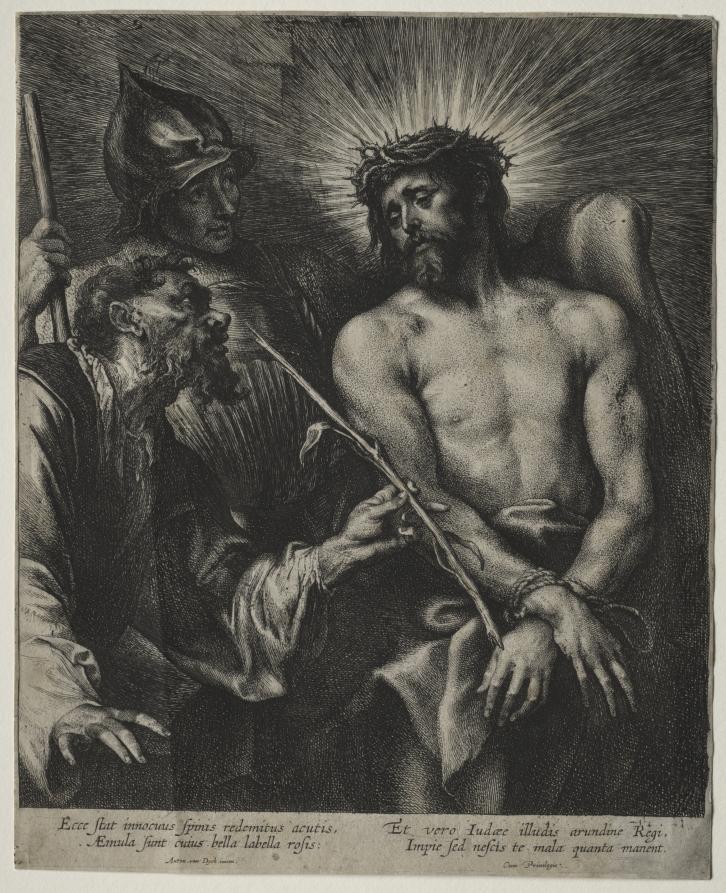
Mocking of Christ
Anthony van Dyck
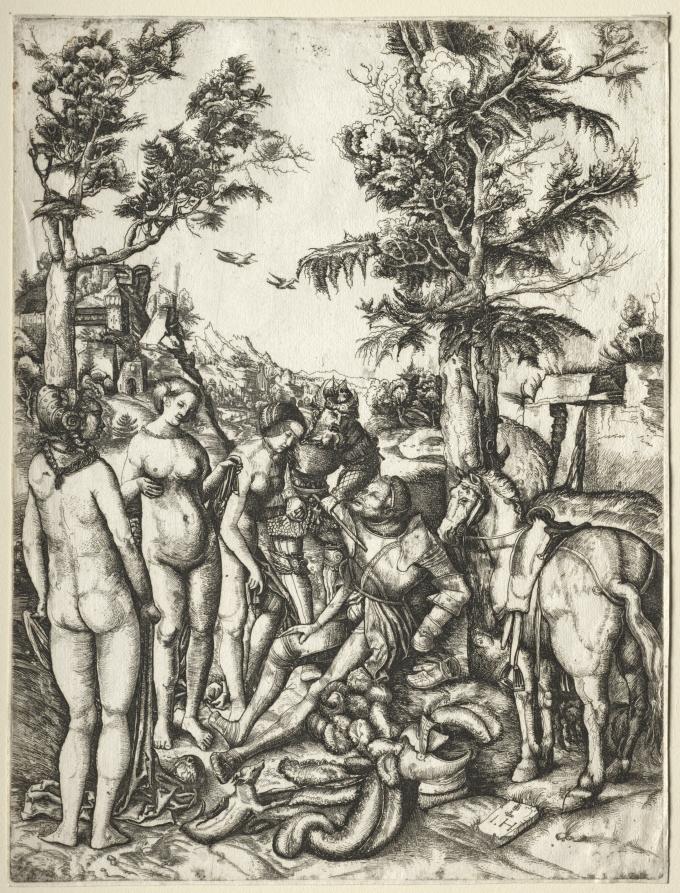
Judgment of Paris
Hieronymus Hopfer
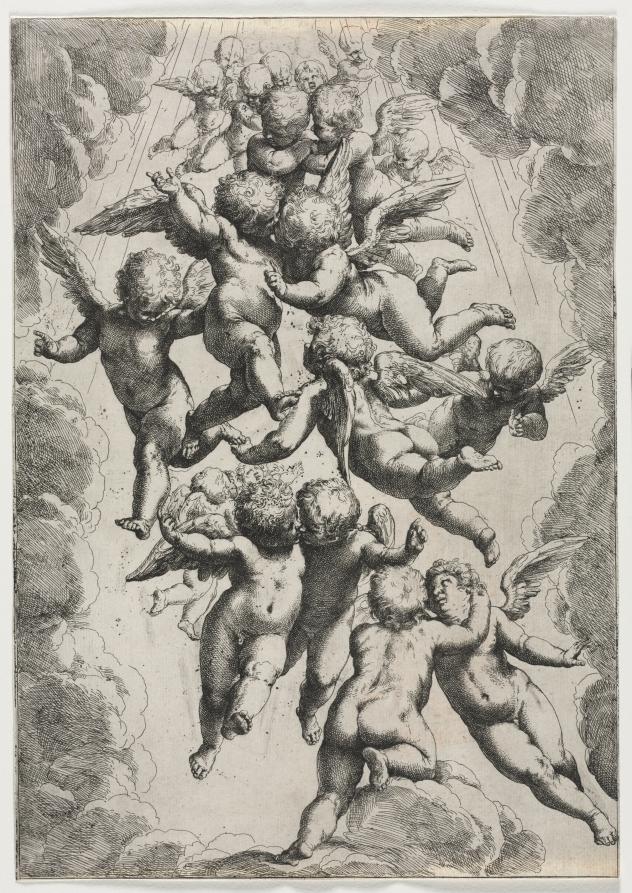
Angels in Glory
Guido Reni
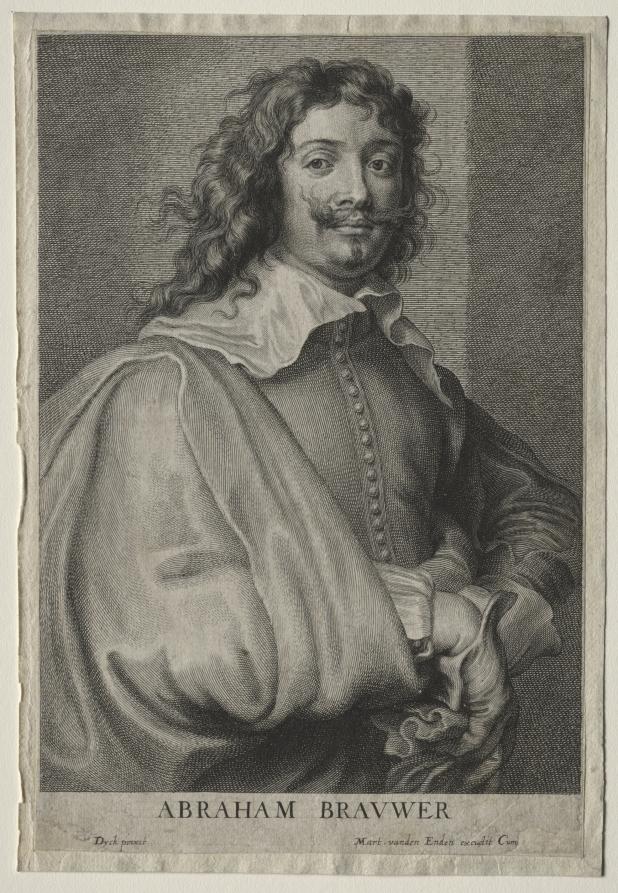
Adrian Brower
Schelte Adams Bolswert
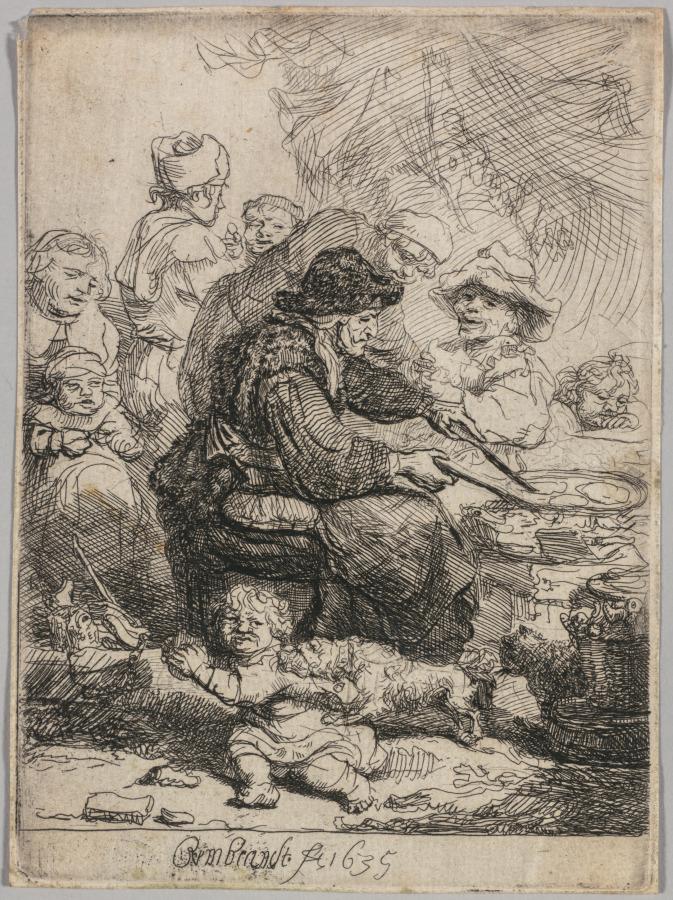
The Pancake Woman
Rembrandt van Rijn
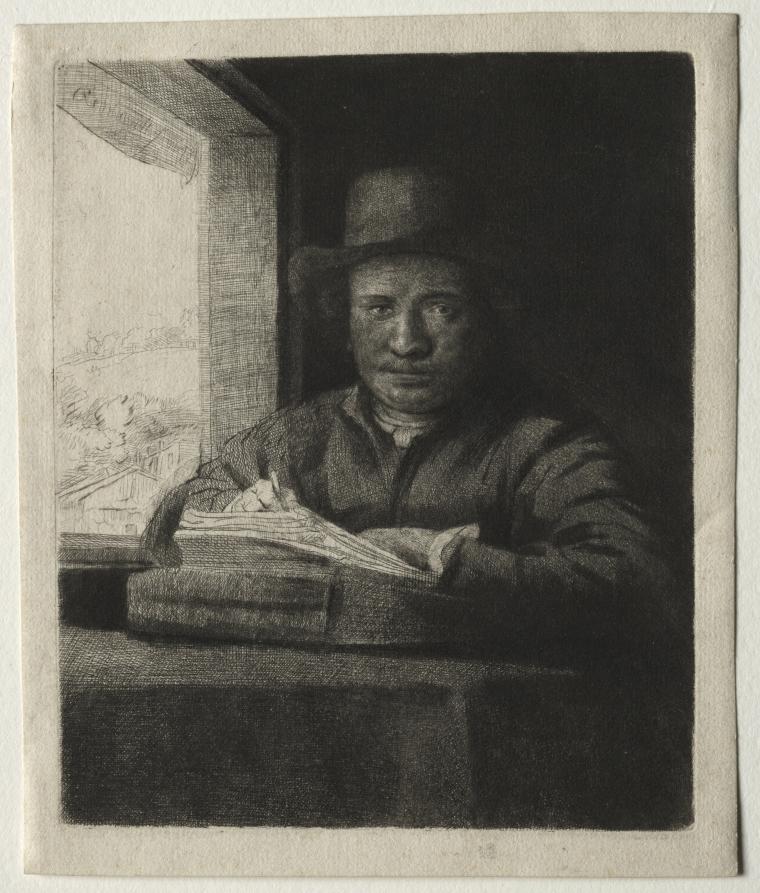
Self-Portrait Drawing at a Window
Rembrandt van Rijn
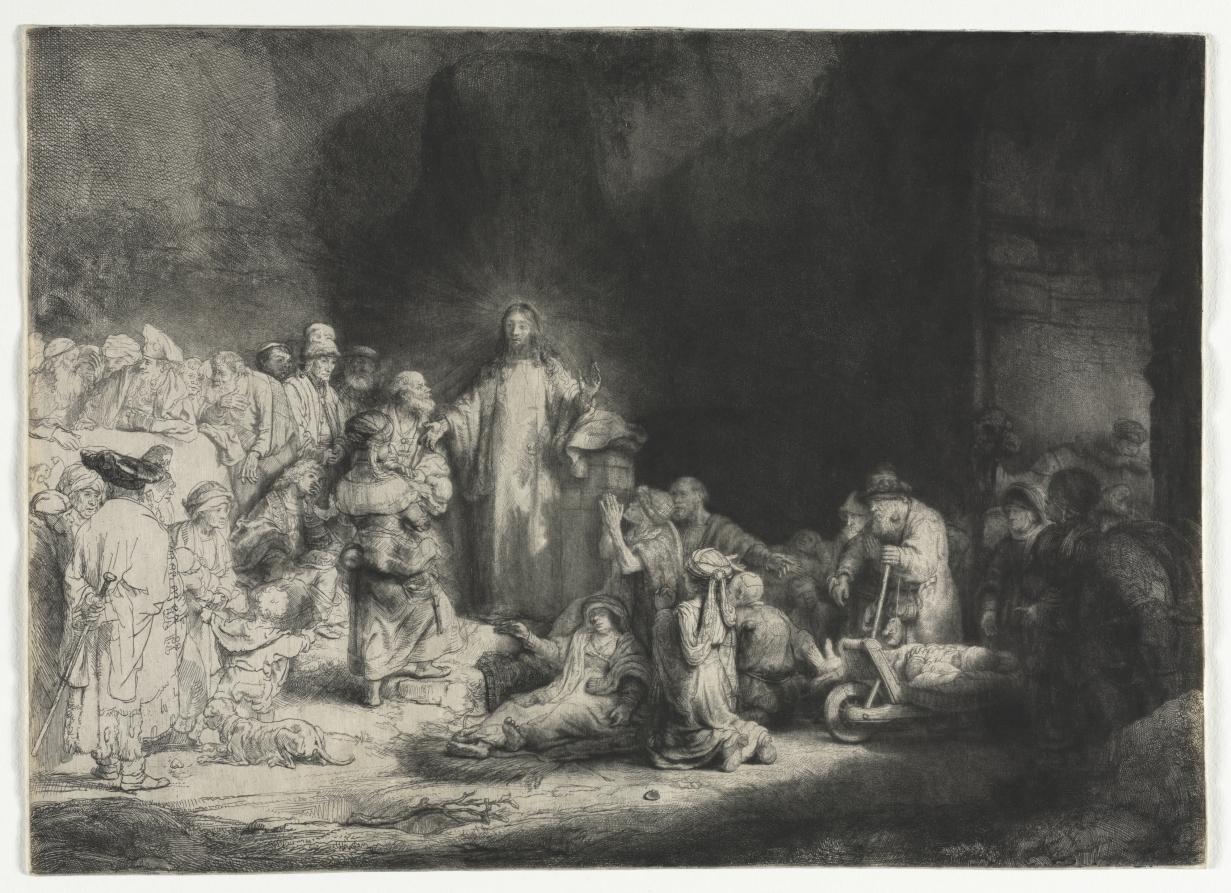
The Hundred Guilder Print
Rembrandt van Rijn
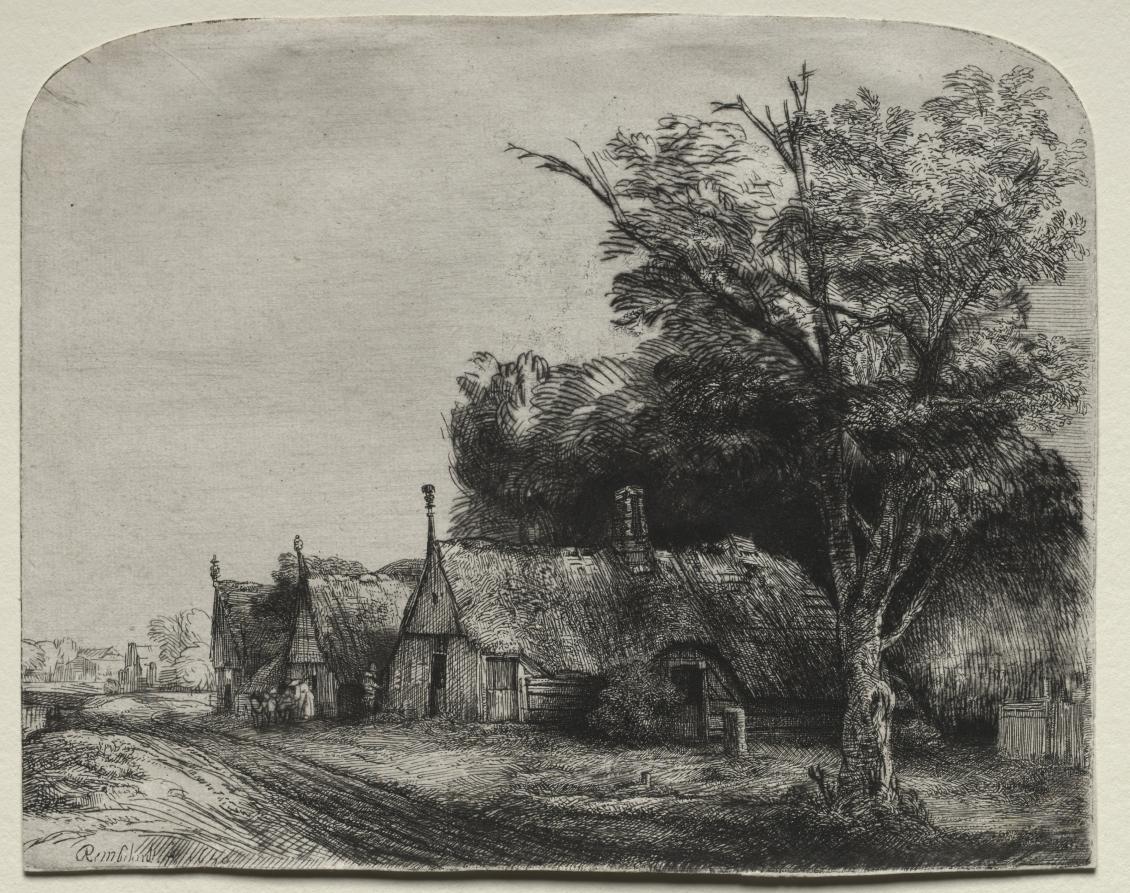
Landscape with Three Gabled Cottages beside a Road
Rembrandt van Rijn