Sword
A sword can mark martyrdom, justice, or worldly power depending on context — from the instrument of a saint's death, to an attribute of the personification of Justice, to a straightforward emblem of military or royal authority.
For martyred saints, a sword usually identifies the specific manner of their death and doubles as an attribute that lets period viewers recognize the figure at a glance — much as keys identify St Peter or a wheel identifies St Catherine. In scenes of violence such as beheadings, the sword is simply the narrative weapon, but its inclusion in a saint's hand or at their feet after the fact turns it into a permanent identifying symbol.
In allegorical and civic painting, an upright sword paired with a set of scales is the standard attribute of Justice, one of the classical cardinal virtues — the sword representing the power to enforce a verdict, the scales representing the impartial weighing that produced it. A sword can also simply signal rank or military command in portraiture, without any allegorical weight at all.
Sword in the collection
Paintings in the catalog documented as featuring this symbol.
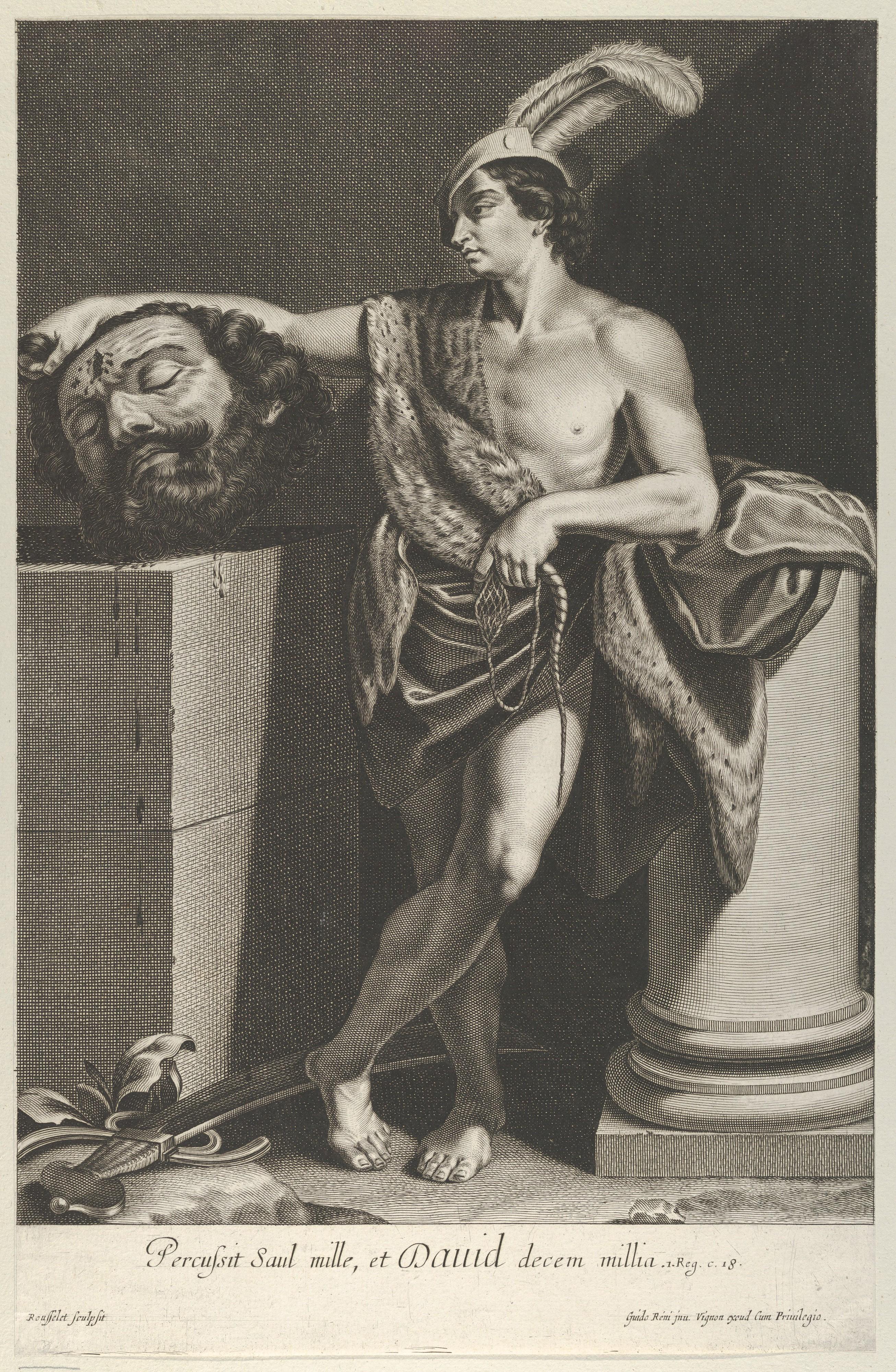
David standing with crossed legs and holding the head of Goliath on a pedestal at left, a sword on the ground, after Reni
Gilles Rousselet
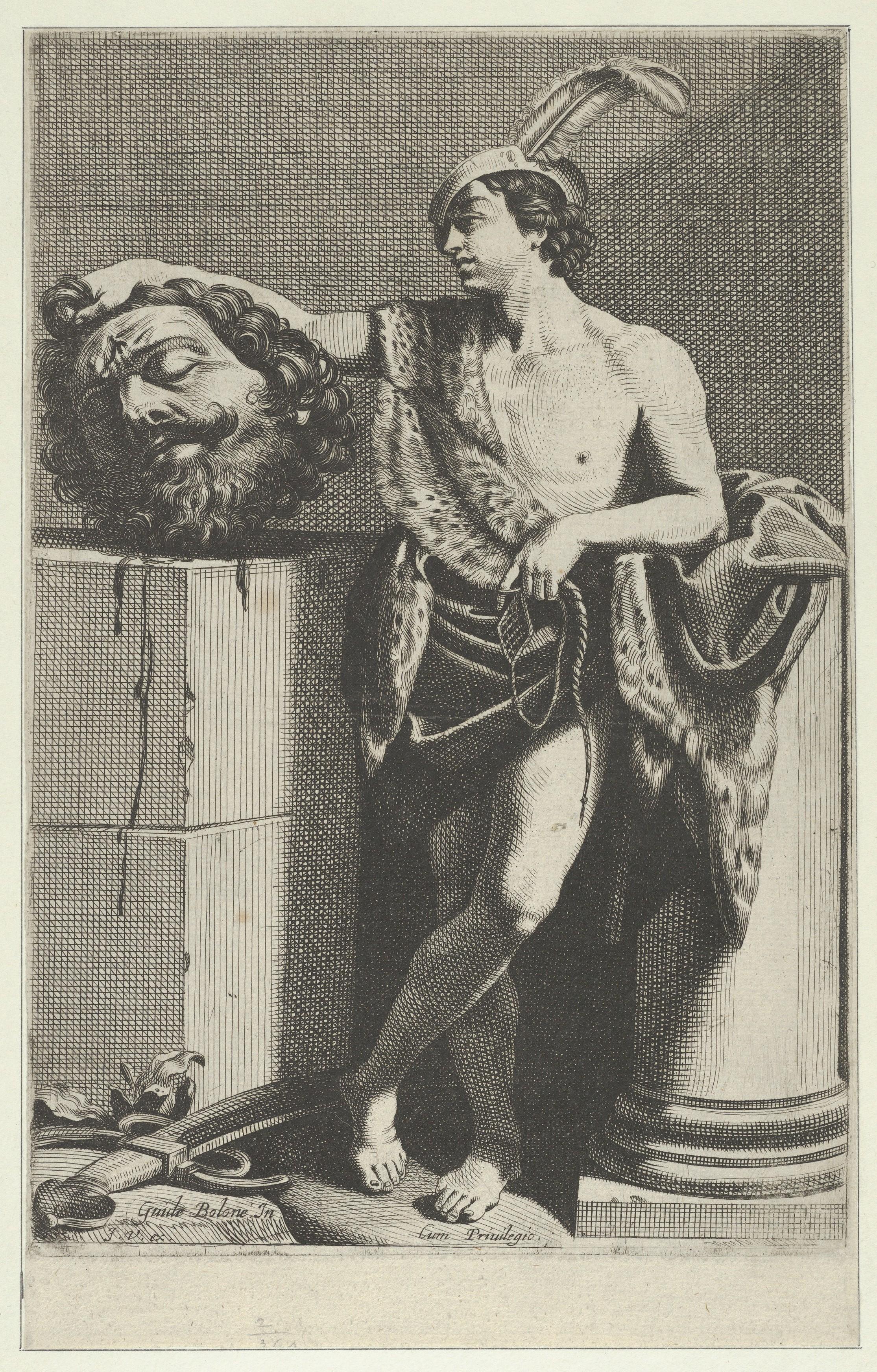
David standing with crossed legs and holding the head of Goliath on a pedestal at left, a sword on the ground, after Reni
Anonymous
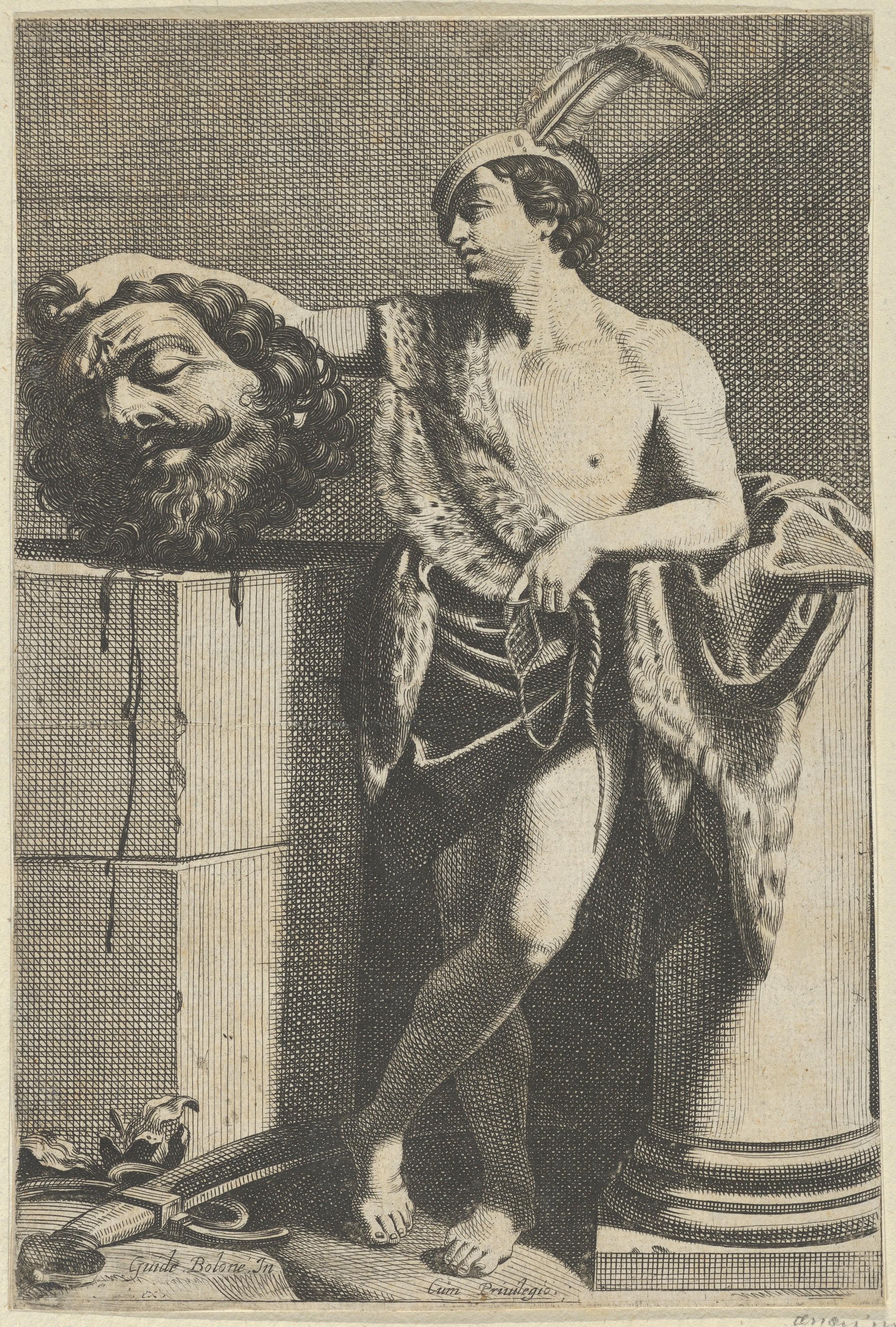
David standing with crossed legs and holding the head of Goliath on a pedestal at left, a sword on the ground, after Reni
Anonymous