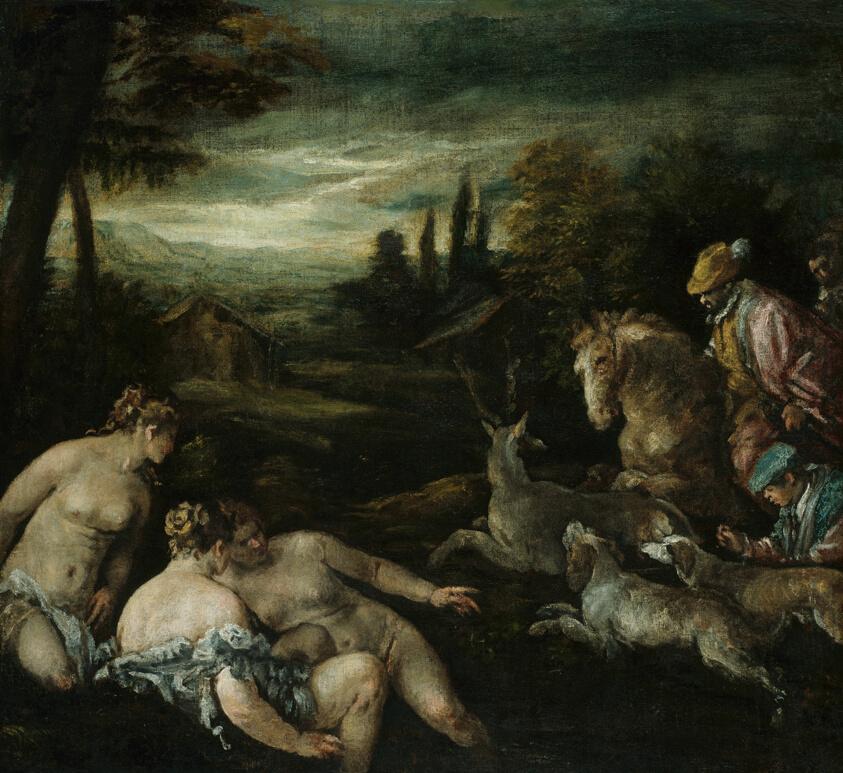
Diana and Actaeon
Jacopo Bassano
555 likes125 comments
Paintale uses cookies for essential site functionality and, where enabled, to serve relevant advertising via Google AdSense. You can accept all cookies or reject non-essential ones. See our Privacy Policy for details.
Now viewing
Tarquin and Lucretia
Tintoretto
Period
1550-1600
Theme
Power & Politics
Medium
Oil on canvas
Current Location
Art Institute of Chicago, Chicago
The Story
According to Roman history, the rape of the virtuous matron Lucretia by Tarquin, son of the Roman king, incited the people to overthrow the monarchy and establish a republic around 510 BCE. Lucretia was hailed as a hero for subsequently committing suicide in an attempt to avoid any perceived dishonor to her family.
Tintoretto depicted one of the most violent moments of the story with his characteristic expressive distortions of anatomy and space and vibrant treatment of light: As Tarquin and Lucretia struggle, a pillow flies through the air, her pearl necklace breaks apart, and the fabric and carved posts of the bed’s canopy collapse around them.
Executed in Oil on canvas, measuring 175 × 151.5 cm (68 7/8 × 59 5/8 in.); Framed: 203.9 × 181 × 8.3 cm (80 1/4 × 71 1/4 × 3 1/4 in.), the surface rewards close looking. Tintoretto builds the composition through layered glazes and a tightly controlled palette, letting cool shadows recede so that the warm, lit passages step forward.
Look closely and the painting opens up. Objects you might pass over — a folded letter, a half-drawn curtain, the angle of a glance — were placed to be read. Commissioned images like this one were rarely neutral; every architectural flourish argues for authority.
Today the painting is held by Art Institute of Chicago in Chicago, where it remains a touchstone for understanding Tintoretto's contribution to Western art. It has been studied, copied, restored, and argued over for centuries — proof that great paintings keep generating new readings long after their creators have gone.
“A silence so complete it becomes its own witness.”
This painting features documented symbols with their own dedicated meaning in art history:
According to Roman history, the rape of the virtuous matron Lucretia by Tarquin, son of the Roman king, incited the people to overthrow the monarchy and establish a republic around 510 BCE. Lucretia was hailed as a hero for subsequently committing suicide in an attempt to avoid any perceived dishonor to her family. Tintoretto depicted one of the most violent moments of the story with his characteristic expressive distortions of anatomy and space and vibrant treatment of light: As Tarquin and Lucretia struggle, a pillow flies through the air, her pearl necklace breaks apart, and the fabric and carved posts of the bed’s canopy collapse around them.
Art Institute Purchase Fund
Technique: oil painting, painting techniques, painting (image making), painting.
Possibly Antonio Tronsarelli, Rome (died 1601) ["Un quadro grande in tela colorito a olio di Tarquinio quando Viola Lucretia di mano del Tentoretto (sic)"; see Matteo Lafranconi, "Antonio Tronsarelli: A Roman collector of the late sixteenth century," Burlington Magazine 140 (1998), p. 545, no. (5)]. Private collection, France [according to Illustrated London News, 4 December 1937]. Robert Lebel, Paris, by 1937 [Illustrated London News, 4 December 1937]. Richard Goetz, Paris and New York, by 1939 [1939 Knoedler exh. cat.]. Sold by E. and A. Silberman Galleries, New York, to the Art Institute, 1949.
Art Institute of Chicago, Chicago. View on the museum’s official page.
See more works at Art Institute of Chicago or browse the full Tintoretto collection.
A restrained palette and sculptural lighting create a solemn geometry. The wooden crate and letter anchor the narrative with journalistic precision.
Sources
Keep Exploring
More paintings like this
Jacopo Bassano
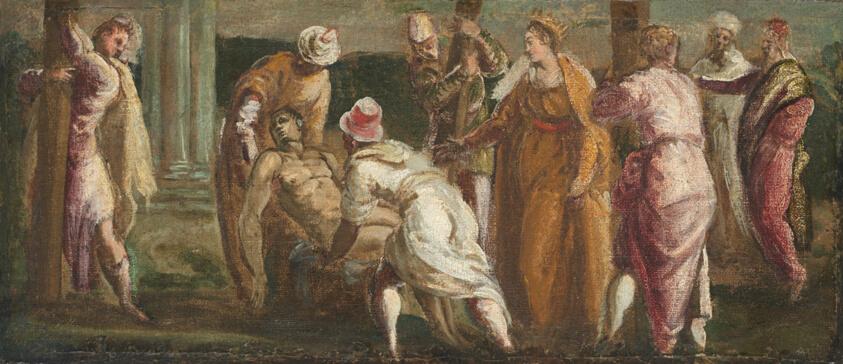
Tintoretto
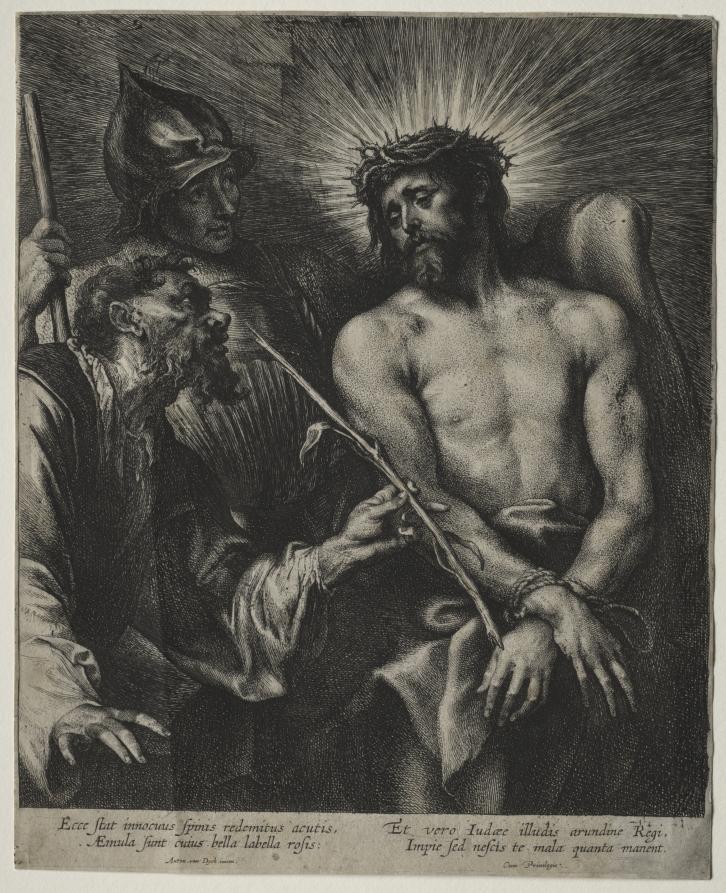
Anthony van Dyck

Leonardo da Vinci

Leonardo da Vinci
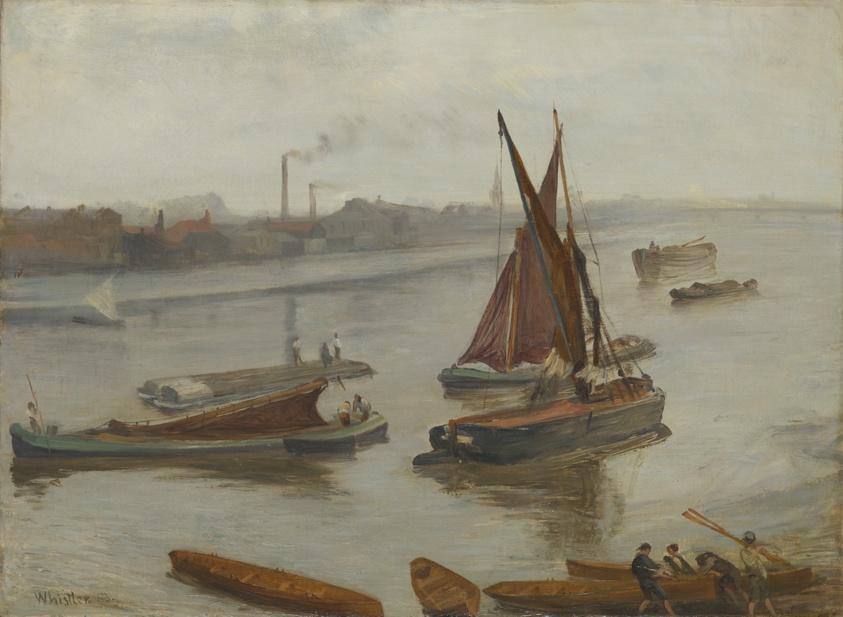
James McNeill Whistler
Moretto da Brescia

Correggio