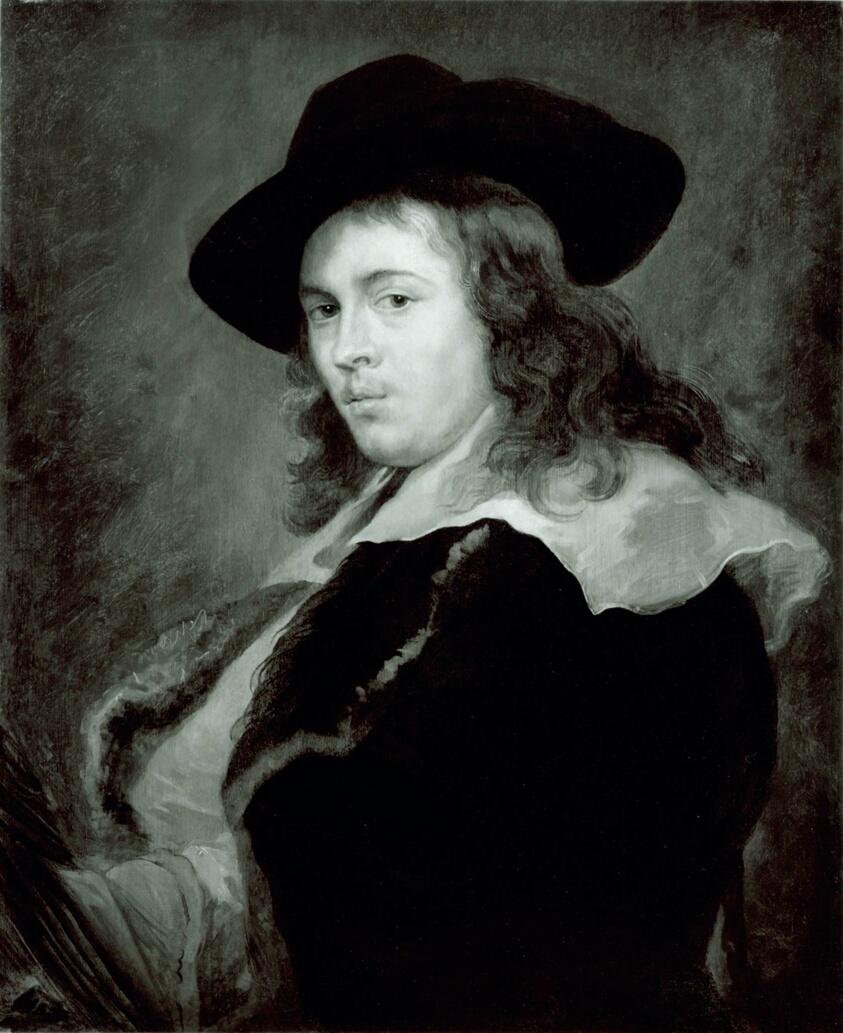
Nicolas Rubens, the Artist's Son
Attributed to Peter Paul Rubens
409 likes139 comments
Paintale uses cookies for essential site functionality and, where enabled, to serve relevant advertising via Google AdSense. You can accept all cookies or reject non-essential ones. See our Privacy Policy for details.
Now viewing
Still Life
Pieter Claesz
Period
1600-1650
Theme
Daily Life
Medium
Oil on panel
Current Location
Art Institute of Chicago, Chicago
The Story
Still Life is a 1657 oil painting by Pieter Claesz. It depicts burning coals in a golden brazier, dried fish, a knocked-over pot, bundled white rods, a knife and a drinking glass half-filled with a dark brown liquid, all sat upon a white surface.
Created in 1620 during the 1600-1650 period, this work belongs firmly within the daily life tradition. Pieter Claesz worked at a moment when the rivalry between Catholic Baroque drama and Protestant restraint reshaped what a painting could mean. Every gesture, fabric, and gleam of light was decoded by contemporary viewers like a private language.
Executed in Oil on panel, measuring 48 × 76.9 cm (18 7/8 × 30 1/4 in.); Framed: 76.2 × 108.8 × 7 cm (30 × 41 1/4 × 2 3/4 in.), the surface rewards close looking. Pieter Claesz builds the composition through layered glazes and a tightly controlled palette, letting cool shadows recede so that the warm, lit passages step forward.
Look closely and the painting opens up. Objects you might pass over — a folded letter, a half-drawn curtain, the angle of a glance — were placed to be read. The apparent casualness is staged — objects and gestures are arranged to read as a moment caught rather than composed.
Today the painting is held by Art Institute of Chicago in Chicago, where it remains a touchstone for understanding Pieter Claesz's contribution to Western art. It has been studied, copied, restored, and argued over for centuries — proof that great paintings keep generating new readings long after their creators have gone.
“A silence so complete it becomes its own witness.”
breakfast, table, plate, fish as food, Clupea harengus, wafer glass, beer, flagon.
Around 1600, as the Dutch economy boomed, large-scale still lifes depicting luxury goods emerged as a genre that appealed to a sophisticated clientele. Pieter Claesz. was a leading painter of a type of still life often described as a “banquet piece,” which featured sumptuous foods and opulent serving vessels, typically strewn across an elaborately dressed tabletop. These costly goods—like the lemon, olives, sweetmeats, and lace-edged damask tablecloth in this painting—were sometimes depicted in a state of decay to suggest the transitory nature of coveted earthly things. The well-preserved items here instead celebrate wealth and its lavish display.
Simeon B. Williams Fund
Materials: oil paint, canvas.
Technique: panel painting, oil painting, painting, painting (image making), painting techniques.
Inscriptions: Inscribed in ligature: PC (on knife blade).
Probably Cassirer, Amsterdam [the mounts of photos in both the Rijksbureau voor Kunsthistorische Documentatie, The Hague, and the Witt Library, London, are marked Cassirer, Amsterdam, 1939, though the picture was at the Art Institute from late 1935; the Witt photo is also annotated “Worcester, Mass.”; see also Vroom 1945 and Bergstrom 1956]. M. Knoedler & Co., New York by 1935 [receipt dated September 9, 1935 in Registrar’s office; the number A 1559 printed on a label on the back may be the Knoedler’s stock number]; sold to the Art Institute, 1935.
Art Institute of Chicago, Chicago. View on the museum’s official page.
See more works at Art Institute of Chicago or browse the full Pieter Claesz collection.
A restrained palette and sculptural lighting create a solemn geometry. The wooden crate and letter anchor the narrative with journalistic precision.
Sources
Keep Exploring
More paintings like this
Attributed to Peter Paul Rubens
Frans Snyders
Pietro della Vecchia
Pieter de Neyn
Attributed to Anthony van Dyck
Workshop of Diego Velázquez
Follower of Peter Paul Rubens
Pieter Codde