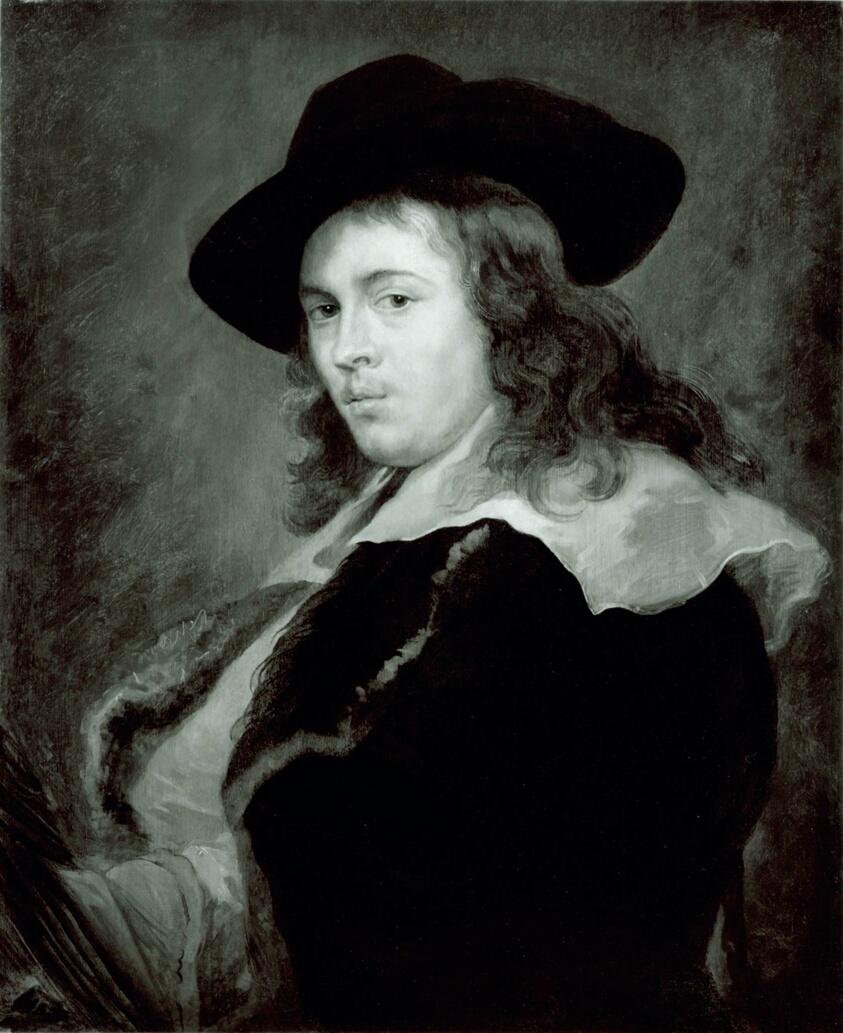
Nicolas Rubens, the Artist's Son
Attributed to Peter Paul Rubens
409 likes139 comments
Paintale uses cookies for essential site functionality and, where enabled, to serve relevant advertising via Google AdSense. You can accept all cookies or reject non-essential ones. See our Privacy Policy for details.
Now viewing
Flowers and Fruit in a Porcelain Bowl
Juan de Zurbarán
Period
1600-1650
Theme
Daily Life
Medium
Oil on canvas
Current Location
Art Institute of Chicago, Chicago
The Story
Long assumed to be the work of Francisco de Zurbarán, the leading painter in Seville, Spain, this canvas is now considered to be by his son, Juan de Zurbarán, who specialized in exquisitely painted still lifes during his short career. The precise, sensuous application of paint and dramatic lighting are typical of Juan, whose style can be identified through only a few signed paintings. The expensive imported Chinese porcelain bowl would have appealed to the wealthy clientele who purchased his refined yet exuberant compositions.
Created in 1640 during the 1600-1650 period, this work belongs firmly within the daily life tradition. Juan de Zurbarán worked at a moment when the rivalry between Catholic Baroque drama and Protestant restraint reshaped what a painting could mean. Every gesture, fabric, and gleam of light was decoded by contemporary viewers like a private language.
Working in Oil on canvas at 82.6 × 108.6 cm (32 1/2 × 42 3/4 in.); Framed: 102.9 × 128.3 × 12.7 cm (40 1/2 × 50 1/2 × 5 in.), Juan de Zurbarán constructs depth through value contrast rather than outline, letting figures emerge from darkness the way they would under candlelight or through a shuttered window.
Look closely and the painting opens up. Objects you might pass over — a folded letter, a half-drawn curtain, the angle of a glance — were placed to be read. Even the everyday is loaded: a basin, a candle, a worn shoe become small monuments to a vanished daily world.
Art Institute of Chicago in Chicago now holds the work, where conservators and historians continue to revisit its condition and attribution. Each generation of scholarship adds a layer to how Juan de Zurbarán's output from this period is understood.
“A silence so complete it becomes its own witness.”
This painting features documented symbols with their own dedicated meaning in art history:
Long assumed to be the work of Francisco de Zurbarán, the leading painter in Seville, Spain, this canvas is now considered to be by his son, Juan de Zurbarán, who specialized in exquisitely painted still lifes during his short career. The precise, sensuous application of paint and dramatic lighting are typical of Juan, whose style can be identified through only a few signed paintings. The expensive imported Chinese porcelain bowl would have appealed to the wealthy clientele who purchased his refined yet exuberant compositions.
Wirt D. Walker Fund
Technique: oil painting, painting, painting (image making), painting techniques.
Don José de Madrazo y Agudo (died 1859), Madrid by 1856 [Madrazo cat. 449]; sold by his heirs to Don José de Salamanca, Marqués de Salamanca, Madrid in 1861 [see Alaminos López and Salas Vázquez 1998, p. 169]. Condesa de Montarco, Madrid by 1905 [lent by her to Madrid 1905; see also handwritten annotation in stretcher]. Art market, probably by June 1933 [photographs both inscribed with the number N3939, bear expertises by Tancred Borenius of June 1933 and August L. Mayer of October 22, 1934; photos in curatorial file]. Knoedler and Co., New York, 1935 [according to New York 1955, cat. 21]. Arnold Seligmann, Rey and Company, New York, by 1936 [this and the following according to Brummer Gallery Records, object inventory card N3939; digitized by the Cloisters Library and Archives, Metropolitan Museum of Art, copy in curatorial file]; sold to Brummer Gallery, New York, May 26, 1936, for $7,000; sold to E. and A. Silberman Galleries, New York, June 25, 1947, as part of a lot for $20,000; purchased by the Art Institute, 1947.
Art Institute of Chicago, Chicago. View on the museum’s official page.
See more works at Art Institute of Chicago or browse the full Juan de Zurbarán collection.
A restrained palette and sculptural lighting create a solemn geometry. The wooden crate and letter anchor the narrative with journalistic precision.
Sources
Keep Exploring
More paintings like this
Attributed to Peter Paul Rubens
Pieter Claesz
Frans Snyders
Pietro della Vecchia
Pieter de Neyn
Attributed to Anthony van Dyck
Workshop of Diego Velázquez
Follower of Peter Paul Rubens